
Can the SC-ST (Prevention of Atrocities) Act-1989 Be Invoked for Online Threats?
Direct Answer:
Yes — the SC/ST (Prevention of Atrocities) Act, 1989 can be invoked for online threats if the threatening conduct is directed against a member of a Scheduled Caste (SC) or Scheduled Tribe (ST) and is motivated by the victim’s caste identity, such that it amounts to an “atrocity” as defined under Section 3 of the Act. Mere abusive posts or threats online that do not demonstrate caste-based motive do not attract the Act, but ordinary criminal or cyber laws may apply instead.
Introduction
The rise of digital communications and social media has transformed how individuals interact, but it has also created new avenues for threats, harassment, hate speech, and intimidation. In India, online abuse can be prosecuted under various criminal statutes — including sections of the Indian Penal Code (IPC), Information Technology Act, and other cybercrime provisions.
For members of SC/ST communities, online intimidation that targets them because of their caste identity can constitute a caste atrocity under the Scheduled Castes and Scheduled Tribes (Prevention of Atrocities) Act, 1989 (the “SC/ST Act”).
This blog post analyzes:
- What constitutes “online threats” under the SC/ST Act
- The legal framework of the SC/ST Act and its applicability to cyber conduct
- Relevant statutory provisions and judicial interpretations
- How “caste motive” is established in online contexts
- Interplay with cybercrime laws
- Procedure for filing complaints
- Evidentiary and enforcement issues
- Practical safeguards and preventive measures
- Case scenarios
- Conclusion
1. Understanding the SC/ST (Prevention of Atrocities) Act, 1989
1.1 Purpose and Scope
The SC/ST Act was enacted to:
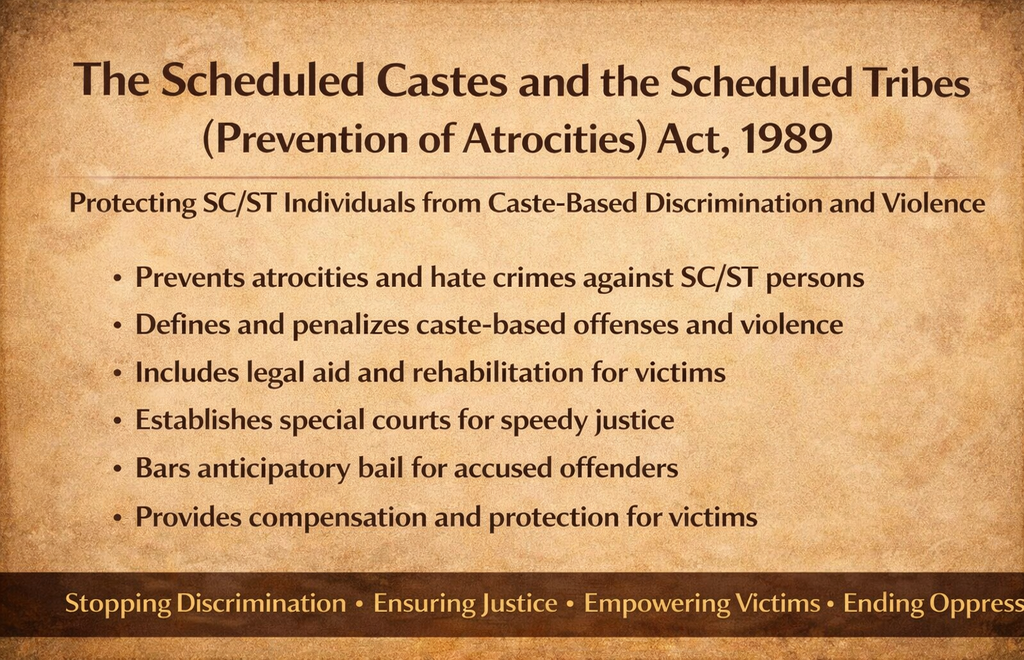
- Prevent atrocities and caste-based discrimination against SC and ST persons
- Punish acts committed because the victim belongs to an SC/ST community
- Provide for Special Courts, speedy trial, and victim relief
The Act recognizes that caste discrimination is not limited to physical assault; it includes social humiliation, economic exclusion, denial of rights, intimidation, and threats.
1.2 Key Legal Threshold: Caste Motive
The essence of the SC/ST Act is that the offence must be committed because the victim belongs to a Scheduled Caste or Scheduled Tribe. Without a caste motive, the Act does not apply.
This requirement was clarified by the Supreme Court in Hitesh Verma v. State of Uttarakhand (2020):
For an offence to be attracted under the SC/ST Act, the conduct must be committed “on the ground that the victim belongs to a Scheduled Caste or Scheduled Tribe.”
2. Understanding Online Threats and Cyber Abuse
2.1 What Are Online Threats?
Online threats can include:
- Threatening messages via social media (Facebook, X/Twitter, Instagram, WhatsApp)
- Casteist abuse or intimidation in public posts or comment threads
- Viral sharing of derogatory content targeted at SC/ST individuals
- Creation of intimidating or defamatory content directed at victims because of caste
- Threats shared through SMS, email, or online groups
When these are tied to caste identity and intend to humiliate, threaten, or intimidate SC/ST persons, the SC/ST Act may apply.
2.2 Cyber Definitions
Online threats fall under cyber activity, but the motive and context determine whether cyber laws alone apply or whether caste atrocity provisions can be invoked.
3. Statutory Provisions of the SC/ST Act Relevant to Online Behaviour
3.1 Section 3 – Atrocities on SC/ST Persons
Section 3 of the Act defines specific acts that are treated as atrocities. Some of these can extend to online conduct:
- Section 3(1)(r): Intentional insult or intimidation in public view designed to humiliate a member of SC/ST
- Section 3(1)(s): Abusing an SC/ST person using caste names
- Threats and intimidation linked to caste identity
If online threats are caste-based, they can fit within these definitions.
3.2 Section 15A – Non-Intimidation of Victims and Witnesses
Section 15A specifically criminalizes:
Intimidation or attempt to intimidate a victim or witness in connection with an offence under this Act.
Online threats against victims or witnesses — especially designed to influence testimony or participation — can attract this provision.
3.3 Section 18A – No Preliminary Inquiry, No Anticipatory Bail
This section strengthens the provision against anticipatory bail and mandates that no preliminary inquiry is necessary for registering an FIR for an offence under the Act. This accelerates action in cases of online threats when they qualify as caste atrocities.
4. How Online Threats Can Qualify as Atrocities
4.1 Caste Motivation Must Be Established
To invoke the SC/ST Act for online threats, the complainant must show:
- The victim is an SC or ST person
- The accused is not an SC/ST person
- The threatening online message/content was targeted because of the victim’s caste identity
- The message aims to humiliate, intimidate, or coerce the victim
4.2 Public View Element
The Act often uses the phrase “in a place within public view.”
Online platforms constitute public view if:
- Content is posted publicly on social media
- Forwarded in multiple group chats
- Open to public interaction
- Shared on public pages or forums
Even if the threat is sent privately, if it is subsequently disseminated or likely to be shared, courts may treat it as “public view.”
4.3 Examples of Caste-Based Online Threats
Online threats that can attract the SC/ST Act include:
- “You SC person should be taught a lesson” posted publicly
- Caste slurs linked with threats of violence or loss of status
- Group messages circulating derogatory caste content targeting the victim
- Threats of social exclusion, violence, or economic coercion based on caste
- Viral memes joked about physically harming SC/ST persons
5. Interplay Between SC/ST Act and Cybercrime Laws
Online threats often invoke cybercrime provisions in addition to the SC/ST Act.
5.1 Indian Penal Code / Bharatiya Nyaya Sanhita
Relevant IPC/BNS provisions include:
- Criminal intimidation
- Defamation
- Abetment
- Insult with intent to provoke breach of peace
These can be used alongside caste atrocity provisions if motive is not purely caste-based.
5.2 Information Technology Act (IT Act)
Online harassment and threats may also be prosecutable under the IT Act:
- Sending threatening or offensive messages
- Publishing defamatory or casteist content
Even when SC/ST Act is invoked, IT Act provisions can supplement prosecution.
6. Case Law and Judicial Interpretation
6.1 Supreme Court: Caste Motive Is Essential
In Hitesh Verma v. State of Uttarakhand, the Supreme Court emphasized:
- Mere abuse or insult does not attract the SC/ST Act;
- There must be caste-based motivation.
This principle applies to online conduct as well.
6.2 High Courts on Online and Public Domain
Several High Courts have acknowledged that:
- Online postings in public forums are analogous to caste-based public humiliations.
- Social media hate speech targeting SC/ST persons can attract the SC/ST Act if caste-based intent is shown.
Judicial interpretation continues to evolve, especially as online platforms become central to communication.
7. Steps for Filing a Complaint for Online Threats Under the SC/ST Act
7.1 Collect Digital Evidence
- Screenshots with timestamps
- URLs and post IDs
- Chat exports
- Metadata and forwarding history
- Witness screenshots
Digital evidence must be preserved carefully.
7.2 Register an FIR
File the complaint at the local police station where:
- The victim resides
- The server/hosting location of the content is located (in complex cases)
Under Section 18A, police must register FIR without a preliminary inquiry if caste atrocity is prima facie made out.
7.3 Police Investigation
Police will:
- Record statements
- Seek digital evidence
- Coordinate with cyber cells
- Forward the case to the Special Court
7.4 Court Proceedings
Cases are tried by Special Courts designated under Section 14 of the SC/ST Act.
8. Evidentiary Considerations in Online SC/ST Act Cases
8.1 Establishing Caste Motive
To prove caste motive:
- Textual evidence in posts (derogatory caste names, slurs)
- Context showing repeated caste harassment
- Witness testimony regarding caste bias
- Patterns of caste targeting in digital posts
8.2 Authentication of Digital Evidence
Under the Indian Evidence Act (or corresponding provisions in the new procedural code):
- Digital evidence must be authenticated
- Proper certification (Section 65B of the Indian Evidence Act) may be needed
- Chain of custody must be maintained
9. Challenges in Using the SC/ST Act for Online Threats
9.1 Proving Caste Motive
Not all online threats are caste-based. Disentangling personal animosity from caste-linked hostility requires:
- Clear evidence that caste was the reason, not a personal dispute
- Judicial scrutiny
9.2 Jurisdiction Issues
Online threats cross geographic boundaries. Determining the appropriate police station or magistrate may involve:
- Place of victim’s residence
- Place where content was published
- Location of servers (in complex cases)
10. Practical Safeguards and Preventive Measures
10.1 Register Cybercrime Complaints
In addition to SC/ST Act complaints, file cybercrime complaints through:
- National Cyber Crime Reporting Portal
- Local cyber cells
10.2 Seek Restraining and Protection Orders
Courts can provide:
- Restraining orders preventing further online abuse
- Temporary injunctions against sharing defamatory content
10.3 Report to Platform Moderators
Social platforms like Facebook, Instagram, X, YouTube, etc., can:
- Remove content
- Ban accounts
- Restrict access
These administrative actions supplement legal remedies.
11. Interplay with Other Relevant Laws
11.1 Information Technology Act
- Criminalizes offensive digital communications
- Complaints can run parallel to SC/ST Act cases
11.2 IPC/BNS Sections
Even when caste motivations are absent, online threats may be prosecuted under:
- Criminal intimidation
- Insult with intent to provoke breach of peace
- Defamation
12. Safeguards Against Misuse
Judicial safeguards exist to prevent misuse of the SC/ST Act for online threats:
- Prima facie caste motive must be shown
- Courts may quash FIRs if no caste element exists
- Courts examine whether allegations amount to caste atrocity
Example: A mere personal insult or threat without caste motivation will not attract the SC/ST Act.
13. FAQs Related to SC/ST Act and Online Threats
Q1: Can WhatsApp threats invoke the SC/ST Act?
Yes, if caste motive is established and threat is disseminated to intimidate an SC/ST person.
Q2: Is social media harassment without caste reference covered?
No under the SC/ST Act — other cybercrime and criminal provisions would apply.
Q3: How to preserve online evidence?
Take screenshots with metadata, save URLs, obtain ISP records if necessary, and secure certified digital copies.
Q4: Can anonymous threats be prosecuted?
Yes, if identity is discoverable through cyber forensics and motive is caste-based.
Q5: Does online threat require public view?
Public posts clearly qualify; private messages may qualify if they are widely forwarded or intended for wider intimidation.
Conclusion
Yes, the SC/ST (Prevention of Atrocities) Act, 1989 can be invoked for online threats — but only when the threatening conduct is directed at a member of a Scheduled Caste or Scheduled Tribe because of their caste identity and satisfies the definition of “atrocity” under the Act. This requires a clear causal link between the victim’s caste and the threatening conduct.
Online threats that are caste-neutral, personal disputes, or ordinary harassment without caste motivation do not attract the SC/ST Act and must be pursued under general criminal or cybercrime laws instead.
The evolving digital environment presents both opportunities for intimidation and new challenges for criminal justice. Courts have increasingly held that “public view” and “intimidation” extend to digital platforms, making the SC/ST Act adaptable to cyberspace — provided the essential element of caste discrimination is established.
Understanding how to align digital evidence, caste motive, and statutory provisions is key to the effective invocation of the SC/ST Act for online threats. Victims should approach legal counsel promptly, preserve evidence carefully, and combine criminal complaints with parallel actions under cybercrime laws to ensure comprehensive redress.
Disclaimer: This information is intended for general guidance only and does not constitute legal advice. Please consult with a qualified lawyer for personalized advice specific to your situation.
Advocate J.S. Rohilla (Civil & Criminal Lawyer in Indore)
Contact: 88271 22304
