
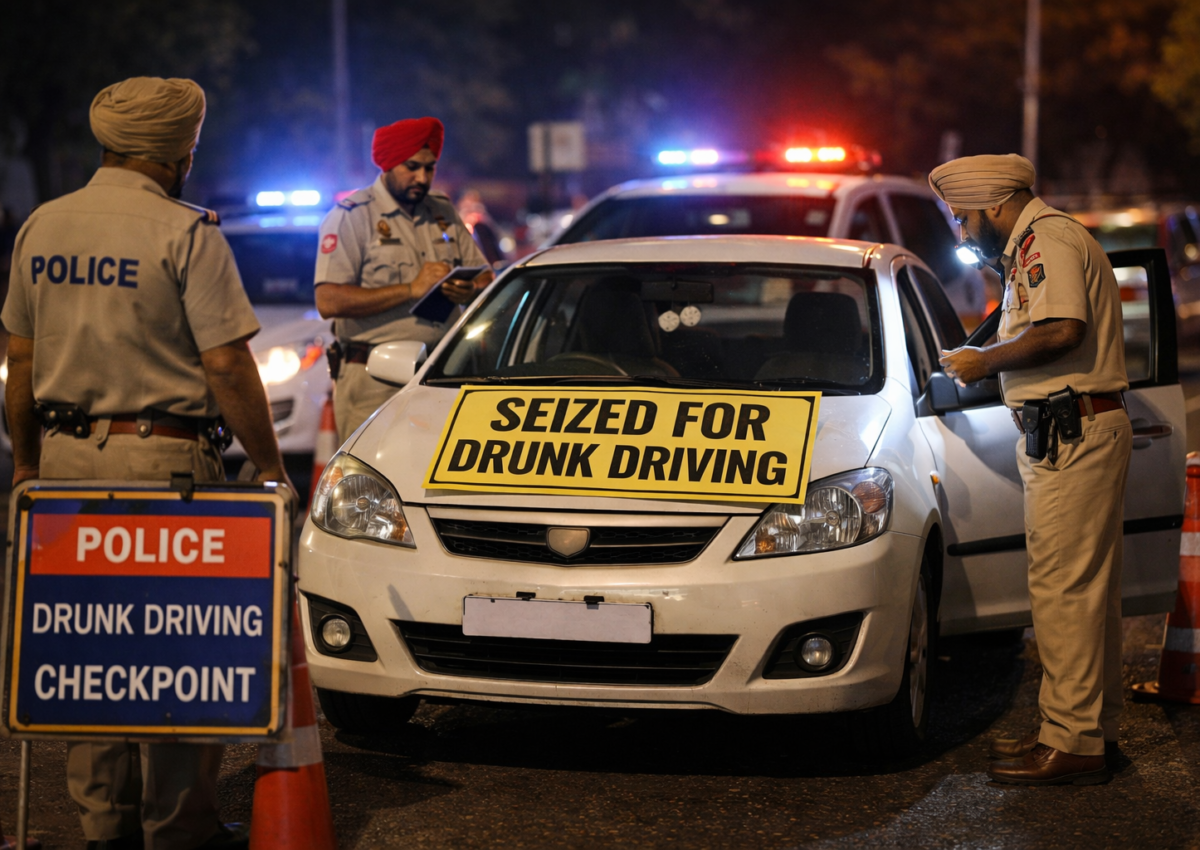
Vehicle Seized by Police in Drunk and Drive Case in Indore
Vehicle Seized by Police in Drunk and Drive Case in Indore: Legal Position, Procedure for Release, and Important Guidelines
Drunk and driving cases are treated seriously under Indian law because they directly endanger public safety. One of the immediate consequences faced by an accused in such cases is seizure of the vehicle by the police. Many vehicle owners are unaware of their legal rights and the proper procedure to get their vehicle released, which often results in the vehicle lying in police custody for months and getting damaged. This article explains, in detail, the legal provisions, reasons for seizure, court procedure, and remedies available when a vehicle is seized in a drunk and drive case in India.
Direct Answer:
In a drunk and drive case, the police may seize the vehicle under the Motor Vehicles Act, 1988, but the vehicle can be released by the court on filing an application for interim custody under Section 451 or Section 457 of the Criminal Procedure Code, subject to conditions.
What Is a Drunk and Drive Offence Under Indian Law?
Drunk and driving is an offence under Section 185 of the Motor Vehicles Act, 1988. A person is said to have committed this offence if:
- The alcohol level in blood exceeds 30 mg per 100 ml of blood, detected through a breath analyzer or blood test, or
- The person is under the influence of drugs to such an extent that they are incapable of exercising proper control over the vehicle.
This offence is punishable with:
- Imprisonment up to six months or fine up to Rs. 10,000 for the first offence, or both, and
- Enhanced punishment for repeat offences.
Why Is the Vehicle Seized in a Drunk and Drive Case?
The police seize the vehicle in a drunk and drive case for the following reasons:
- The vehicle is treated as an instrument used in the commission of the offence.
- Seizure is necessary to prevent further danger to public safety.
- The vehicle may be required as material evidence during trial.
- In cases of accidents, the vehicle becomes crucial evidence for investigation.
The power to seize the vehicle is generally exercised under Section 102 of the Criminal Procedure Code read with the relevant provisions of the Motor Vehicles Act.
Is Seizure of Vehicle Mandatory in Every Drunk and Drive Case?
Seizure of the vehicle is not mandatory in every drunk and drive case, especially when the offence is detected during routine checking and no accident has occurred. In many cases, the police issue a challan and allow the vehicle to be taken away by a sober person.
However, seizure usually takes place when:
- The accused is heavily intoxicated
- The offence is accompanied by rash or dangerous driving
- An accident has occurred causing injury or damage
- The driver fails to produce valid documents
Legal Provisions Applicable for Vehicle Seizure and Release
1. Motor Vehicles Act, 1988
- Section 185 deals with punishment for drunk and driving.
- Section 206 empowers the police to seize documents such as driving licence.
- The Act itself does not provide permanent confiscation of the vehicle for drunk driving.
2. Criminal Procedure Code, 1973
- Section 102 CrPC authorises police to seize property suspected to be involved in an offence.
- Section 451 CrPC empowers the Magistrate to release the vehicle during pendency of trial.
- Section 457 CrPC applies when seizure is reported to the Magistrate and trial has not yet commenced.
3. Bharatiya Nagarik Suraksha Sanhita, 2023
Under the new criminal law, similar powers continue, and courts remain competent to pass interim custody orders for seized vehicles to avoid unnecessary damage.
Procedure to Get Vehicle Released in a Drunk and Drive Case
Step 1: Verify Case Details
The vehicle owner must first confirm:
- Whether an FIR has been registered
- Under which sections the case is registered
- Whether the vehicle has been formally produced before the Magistrate
This information determines the appropriate legal remedy.
Step 2: File Application for Interim Custody of Vehicle
An application for release of vehicle (Supurdgi) must be filed before the jurisdictional Magistrate under Section 451 or 457 CrPC. The application should clearly mention:
- Ownership of the vehicle
- Registration number and description
- Assurance to produce the vehicle whenever required
- Grounds showing that continued police custody will cause damage and loss
Step 3: Documents Required for Release
The following documents are generally required:
- Registration Certificate (RC)
- Insurance policy
- Copy of FIR or challan
- Identity proof of the owner
- Seizure memo (panchnama), if available
In some cases, photographs of the vehicle are also directed to be filed on record.
Step 4: Conditions Imposed by Court
The Magistrate may release the vehicle subject to conditions such as:
- Execution of a Supurdginama bond
- Undertaking not to sell, transfer, or alter the vehicle
- Production of the vehicle as and when directed
- Compliance with any traffic-related penalties
Courts usually impose reasonable conditions to ensure availability of the vehicle during trial.
Supreme Court Guidelines on Release of Seized Vehicles
The Supreme Court, in Sunderbhai Ambalal Desai v. State of Gujarat, has categorically held that:
- Vehicles should not be kept in police custody for long periods
- Police stations are not meant for storing seized vehicles
- Early release of vehicles prevents deterioration and unnecessary hardship
This judgment is frequently relied upon by courts while allowing release applications in drunk and drive cases.
What Happens to the Driving Licence in Drunk and Drive Cases?
Apart from vehicle seizure, the police may:
- Seize the driving licence
- Recommend suspension or disqualification by the Licensing Authority
Release of the vehicle does not automatically mean release or restoration of the driving licence, which follows a separate legal process.
Can the Vehicle Be Confiscated Permanently in Drunk and Drive Cases?
Generally, permanent confiscation of the vehicle is not provided under the Motor Vehicles Act for drunk driving alone. Confiscation may arise only if:
- The vehicle is involved in another serious offence
- Special laws are attracted
- A specific court order is passed after conviction
In normal drunk and drive cases, the vehicle is only seized temporarily.
Practical Tips for Vehicle Owners
- Apply for release of vehicle at the earliest to avoid damage
- Keep all vehicle documents updated and readily available
- Avoid informal methods or illegal payments
- Engage a lawyer to ensure proper compliance with court procedures
Conclusion
Seizure of a vehicle in a drunk and drive case is a preventive and procedural step, not a punishment in itself. Indian law clearly recognizes that prolonged police custody of vehicles causes unnecessary loss and hardship to owners. Courts have consistently directed early release of seized vehicles on suitable conditions. By understanding the applicable legal provisions and promptly approaching the Magistrate for interim custody, a vehicle owner can lawfully secure the release of their vehicle even in a drunk and drive case, while the criminal proceedings continue independently.
Important: Kindly Refer New Corresponding Sections of Bharatiya Nyaya Sanhita 2023, (BNS); Bharatiya Nagarik Suraksha Sanhita 2023, (BNSS); & Bharatiya Sakshya Adhiniyam 2023, (BSA) for IPC; CrPC & IEA used in the article.
Disclaimer: This information is intended for general guidance only and does not constitute legal advice. Please consult with a qualified lawyer for personalized advice specific to your situation.
Advocate J.S. Rohilla (Civil & Criminal Lawyer in Indore)
Contact: 88271 22304
