
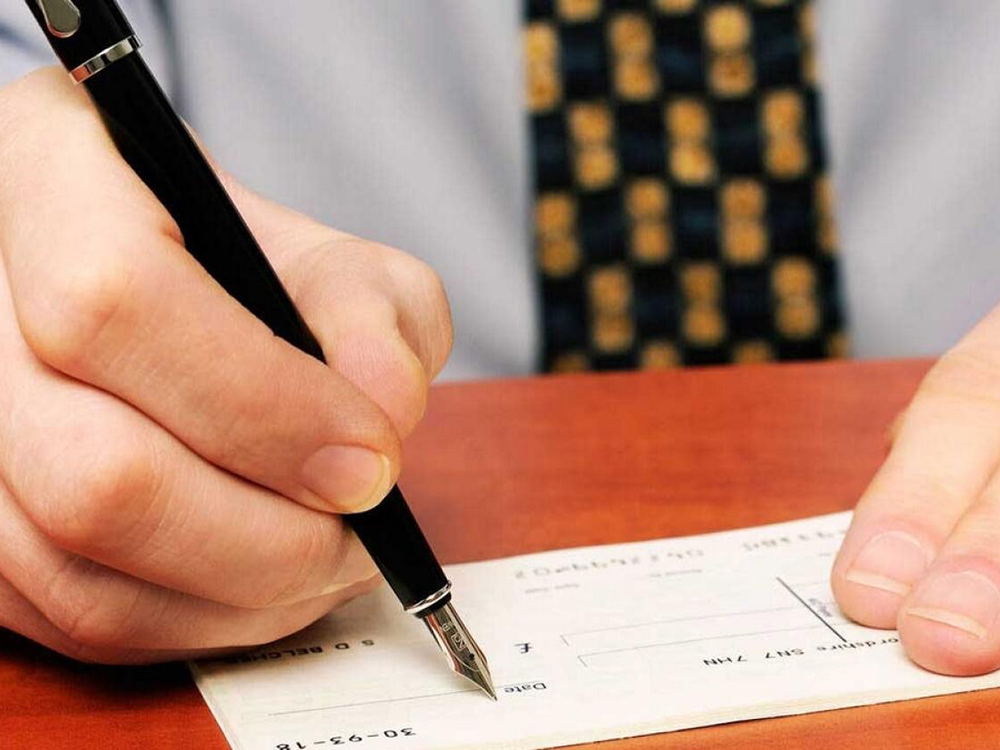
Cheque Bounce Penalty Charges Levied by Different Banks in Indore
Cheque bounce penalty charges in Indore are not fixed by the city or by the Negotiable Instruments Act, 1881; they are generally levied by the concerned bank according to its applicable Schedule of Charges, account type, reason for dishonour, cheque amount and whether the cheque was issued or deposited. The bank charge is separate from the legal consequences of cheque dishonour under Section 138 of the Negotiable Instruments Act, 1881.
For a person dealing with a cheque bounce matter in Indore, it is important to distinguish between three different things:
- Bank’s cheque-return/bounce charge;
- The amount legally recoverable under the dishonoured cheque; and
- The criminal/civil consequences that may arise after dishonour, particularly under Section 138 of the Negotiable Instruments Act.
A bank may deduct only a few hundred rupees as a cheque-return charge, but a cheque dishonour involving a substantial amount can result in much more serious legal consequences if the statutory requirements of Section 138 are satisfied.
1. What is a cheque bounce charge?
When a cheque is presented for payment and the bank returns it unpaid, the bank may levy a cheque return charge on the customer, depending upon the circumstances.
For example, if A issues a cheque of ₹5,00,000 to B and A’s account does not have sufficient funds, A’s bank may impose a cheque-return charge on A.
At the same time, B’s bank may also impose a charge on B when the cheque deposited by B is returned unpaid.
Thus, in a typical cheque dishonour transaction, both the drawer and the payee can potentially incur banking charges, although the applicable amount depends upon their respective banks and account categories. Bank of Baroda itself explains that cheque-bounce charges may be levied on both the issuer and recipient and may vary according to the bank, account type and cheque amount. Bank of Baroda
This distinction becomes particularly important in cheque-bounce litigation because the bank charge is not the same thing as the cheque-bounce liability under Section 138 NI Act.
2. Is there one fixed cheque bounce penalty for all banks in Indore?
No.
There is no single “Indore cheque bounce penalty” prescribed by law.
A customer maintaining an account with SBI in Indore will be governed by SBI’s applicable charges. A customer maintaining an account with HDFC Bank, ICICI Bank, Axis Bank, Bank of Baroda, PNB or another bank will be governed by that bank’s applicable schedule.
Banks may also differentiate between:
- Savings Bank accounts;
- Current accounts;
- Cash Credit accounts;
- Overdraft accounts;
- Business accounts;
- Corporate accounts;
- Retail accounts;
- Local clearing;
- Outstation collection;
- Financial reasons;
- Technical reasons; and
- First or subsequent returns.
Therefore, when advising a client in a cheque bounce matter in Indore, I would not advise relying merely upon a general internet table of bank charges. The applicable Schedule of Charges for the particular account and the relevant date should be checked.
The Reserve Bank of India has also required banks to ensure that cheque-return charges are levied only where the customer is at fault and responsible for the return. Reserve Bank of India
3. Approximate cheque bounce charges of major banks relevant to customers in Indore
The following table provides a practical comparison based on publicly available bank schedules and current published information. These figures should be treated as indicative rather than as a universal tariff for every account, because charges can differ by account category and bank schedule.
| Bank | Typical cheque-return charge | Important point |
|---|---|---|
| SBI | ₹150 / ₹250 for deposited cheques depending on amount; certain customer-fault returns ₹150 | Charges depend on type of return and amount |
| HDFC Bank | Often around ₹400–₹500 for successive outward returns in applicable schedules | Repeat returns can attract higher charges |
| ICICI Bank | Charges vary according to financial/non-financial return and account category | Repeat financial returns can attract higher charges |
| Axis Bank | Around ₹500 and higher for certain current/business accounts | Some schedules provide higher charges for subsequent returns |
| Bank of Baroda | ₹125–₹500 for inward returns and ₹150–₹500 for certain outward returns, depending on amount/account | Technical returns not attributable to customer may be free |
| PNB | Generally amount-based | Different inward/outward slabs may apply |
| Kotak Mahindra Bank | Often ₹350 for first return and higher charges for subsequent returns in applicable schedules | Account-specific schedule applies |
The variation is substantial. For example, SBI’s published business banking information currently states ₹150 per cheque for cheques deposited with SBI and returned unpaid up to ₹1 lakh, and ₹250 for amounts above ₹1 lakh; it also states ₹150 for cheques drawn on SBI and returned due to customer fault, while specifically excluding cases where the customer is not at fault under RBI guidelines. SBI Bank
Bank of Baroda’s current published service-charge information similarly provides amount-based inward and outward cheque-return charges and expressly states that no charge is applicable where a technical return is not attributable to the customer’s fault. Bank of Baroda
Axis Bank’s published schedules likewise show that cheque-return charges can differ depending upon whether the cheque was issued by the customer or deposited by the customer, and some current-account schedules provide higher charges for repeated returns. AxisBank
Important caution regarding bank-wise figures
Bank charges are periodically revised. Moreover, a bank can have different schedules for different account products.
Therefore, if a client in Indore asks:
“Exactly how much cheque bounce charge will my bank deduct?”
the proper legal and practical answer is:
Check the Schedule of Charges applicable to that particular account on the date of the transaction, rather than relying solely on a general bank-wise table.
4. SBI cheque bounce charges in Indore
SBI is one of the most commonly encountered banks in cheque litigation in Indore.
According to SBI’s published information, where a cheque deposited with SBI is returned unpaid, the charge is:
- ₹150 per cheque where the cheque amount is up to ₹1 lakh; and
- ₹250 per cheque where the cheque amount is above ₹1 lakh.
For cheques drawn on SBI and returned because of the customer’s fault, SBI’s published information provides a ₹150 charge and expressly states that the charge is not to be imposed where the customer is not at fault under RBI guidelines. SBI Bank
Therefore, if a ₹10 lakh cheque issued from an SBI account in Indore is dishonoured for insufficient funds, the bank charge is only one aspect of the matter.
The ₹10 lakh cheque amount itself is obviously not limited to the ₹150 bank charge.
If the statutory requirements are fulfilled, the payee may separately initiate proceedings under Section 138 NI Act.
5. Bank of Baroda cheque bounce charges
Bank of Baroda has published an amount-based structure for cheque returns.
Its current service-charge schedule provides, for specified account categories, different charges for:
Inward return
For certain urban savings-bank accounts:
- Up to ₹1 lakh – ₹125
- Above ₹1 lakh and below ₹1 crore – ₹250
- ₹1 crore and above – ₹500
Outward return
For specified current/OD/CC accounts:
- Up to ₹1 lakh – ₹150
- Above ₹1 lakh and below ₹1 crore – ₹250
- ₹1 crore and above – ₹500
The same published schedule states that technical returns not attributable to the customer are not charged. Bank of Baroda
This is particularly relevant in a legal dispute because every cheque return does not necessarily mean that the drawer was responsible for the dishonour.
6. Axis Bank cheque bounce charges
Axis Bank’s published schedules show that charges depend upon the particular account category.
For example, one of its current-account schedules provides:
- ₹500 for the first and second cheque-return instruments; and
- ₹750 from the third return onwards during the month,
while cheque returns deposited by the customer may have a separate charge. AxisBank
Accordingly, if an Axis Bank customer in Indore has multiple cheque returns within the same month, the applicable charge may not be identical for every return.
This is another reason why a lawyer examining a bank statement should look at the actual debit entry and applicable Schedule of Charges, rather than simply stating that “Axis Bank charges ₹500.”
7. Why can the payee also be charged?
A common misconception is:
“I did not issue the cheque, so why has my bank charged me?”
The reason is that there can be two separate banking transactions.
Suppose:
- A has an account with Bank X;
- B has an account with Bank Y;
- A issues a cheque to B;
- B deposits the cheque into Bank Y;
- The cheque is presented to Bank X;
- Bank X returns it unpaid.
There can consequently be:
Drawer-side return charge: Bank X → A
and
Depositor/payee-side return charge: Bank Y → B.
Therefore, even an innocent payee who deposited a cheque can sometimes see a “cheque return charge” in his bank statement.
Bank of Baroda expressly notes that the recipient may also be charged when a deposited cheque is returned unpaid. Bank of Baroda
8. Does cheque bounce charge mean that a Section 138 case has been filed?
No.
This is one of the most important distinctions.
A bank debit entry such as:
“Cheque Return Charges – ₹150”
does not mean that a criminal cheque-bounce case has automatically been filed.
A bank charge is a banking consequence.
A Section 138 case is a legal proceeding arising from dishonour of a cheque, subject to the statutory conditions prescribed under the Negotiable Instruments Act, 1881.
For Section 138 to apply, the dishonoured cheque must satisfy the statutory requirements, including that it was issued for the discharge, wholly or partly, of a legally enforceable debt or other liability.
The usual statutory sequence is:
Cheque issued → presentation → dishonour → bank return memo → statutory demand notice → 15-day payment period → cause of action → complaint within prescribed limitation.
The banking charge itself does not create the offence.
9. What happens after a cheque bounces?
Suppose a person in Indore receives a cheque for ₹5,00,000.
The cheque is deposited in his bank account.
The cheque is returned with the reason:
“Funds Insufficient.”
The bank may charge a return fee.
But the legal process is separate.
The payee should obtain the cheque return memo showing the reason for dishonour.
If the statutory requirements of Section 138 are satisfied, the payee may issue a demand notice to the drawer.
The notice is generally required to be issued within 30 days from receipt of information from the bank regarding dishonour.
The drawer gets 15 days from receipt of the notice to make payment.
If payment is not made within that period, the cause of action arises and the complaint has to be filed within the statutory limitation period.
Axis Bank’s explanation of the Section 138 process similarly identifies the 30-day notice period and the 15-day payment period. AxisBank
10. Is the bank’s cheque bounce charge recoverable from the drawer?
This requires careful consideration.
Suppose:
- Cheque amount = ₹5,00,000
- Payee’s bank return charge = ₹150
- Drawer bank charge = ₹500
The ₹500 deducted by the drawer’s bank is a banking charge imposed on the drawer.
The ₹150 deducted by the payee’s bank is a banking charge imposed on the payee.
That does not automatically mean that ₹5,00,000 + every bank charge automatically becomes the amount payable under Section 138.
The lawyer should distinguish between:
- The amount represented by the cheque;
- The legally enforceable debt/liability;
- Bank charges;
- Notice expenses;
- Litigation expenses; and
- Any compensation or costs that may ultimately be awarded by a competent court.
The precise claim should therefore be drafted according to the facts and legal basis available in the individual case.
11. Can bank charges be claimed in a cheque bounce case in Indore?
A payee may incur expenses because of the dishonour, such as:
- cheque-return charges;
- legal notice expenses;
- advocate’s fees;
- court-related expenses;
- documentation expenses; and
- other reasonably incurred expenses.
However, the mere fact that the bank has charged an amount does not automatically make every such amount part of the Section 138 cheque amount.
This distinction becomes important while drafting a statutory demand notice.
For example, if the cheque is for ₹10 lakh, the notice should clearly identify the cheque amount and should not casually convert miscellaneous charges into the principal cheque amount.
The drafting of the notice should be legally precise because defects in the statutory notice can become significant during litigation.
12. What if the cheque bounced for technical reasons?
This is a very important area.
Not every cheque return is caused by the drawer.
A cheque can be returned for reasons such as:
- insufficient funds;
- account closed;
- payment stopped;
- signature mismatch;
- stale cheque;
- irregular signature;
- incorrect details;
- technical clearing issue;
- image-related issue;
- bank-side technical problem; or
- other reasons.
The legal consequences depend upon the exact reason recorded in the return memo and the surrounding facts.
RBI’s directions state that cheque-return charges should be imposed only where the customer is at fault and responsible for the return. Reserve Bank of India
Bank of Baroda’s current schedule similarly provides no charge for technical reasons where the customer is not at fault. Bank of Baroda
Therefore, a lawyer should never examine merely the fact that “cheque returned.”
The return reason should be examined.
13. Why is the cheque return memo important in a Section 138 case?
The cheque return memo is an important document because it records the bank’s reason for dishonour.
A cheque-bounce file should ordinarily contain:
- Original cheque;
- Cheque number;
- Date of cheque;
- Amount;
- Bank details;
- Deposit/presentation details;
- Cheque return memo;
- Reason for dishonour;
- Legal demand notice;
- Postal/courier/electronic delivery evidence, as applicable;
- Proof of service;
- Correspondence between parties;
- Documents showing the underlying transaction/debt; and
- Relevant account statements or other supporting evidence.
For a lawyer practising in Indore, maintaining this chronology properly can make the difference between a well-prepared Section 138 complaint and a poorly documented case.
14. Can a cheque be presented again after it bounces?
In appropriate circumstances, yes.
A cheque may be re-presented during its validity period, subject to the applicable law and facts.
However, repeated presentation should be handled carefully.
The limitation and notice strategy must be examined with reference to the particular dishonour and subsequent presentation.
A common mistake is to assume:
“The cheque bounced once, therefore I can simply wait indefinitely.”
That is incorrect.
The statutory limitation provisions under Section 138 must be carefully tracked.
15. What if the same cheque bounces more than once?
Repeated dishonour can create additional practical issues.
For example:
First presentation: 1 October
Cheque returned: 2 October
Second presentation: 15 October
Cheque returned again: 16 October
The lawyer must examine which dishonour is being relied upon, whether a notice was issued, whether payment was made, whether the cheque was validly re-presented and how limitation operates.
Repeated presentation should therefore not be treated as merely a banking issue.
It can have direct implications for the litigation strategy.
16. Does cheque bounce charge depend upon the cheque amount?
Often, yes.
Some banks use amount-based slabs.
For example, SBI’s published business information differentiates between cheques up to ₹1 lakh and those above ₹1 lakh for certain deposited cheque-return charges. SBI Bank
Bank of Baroda also uses amount-based slabs in its published schedule. Bank of Baroda
Other banks or account categories may instead use:
- flat charges;
- first-return charges;
- second-return charges;
- monthly slabs; or
- different inward/outward charges.
Consequently, a ₹50,000 cheque and a ₹50 lakh cheque may not necessarily attract the same bank-return charge.
17. Does GST apply to cheque bounce charges?
This depends upon the nature of the charge and the applicable bank schedule.
Bank service charges are generally stated either inclusive or exclusive of applicable taxes depending on the bank’s schedule.
For example, Bank of Baroda’s service-charge page expressly states that its listed service charges are exclusive of GST and that applicable GST is levied additionally. Bank of Baroda
Therefore, while examining a bank statement, a lawyer should distinguish between:
Base cheque-return charge + applicable GST/tax
rather than assuming that the displayed amount necessarily represents the entire debit.
18. Can a bank charge be challenged?
Yes, in an appropriate case.
If the cheque was returned because of a bank-side error or for a reason for which the customer was not responsible, the customer can approach the bank for reversal/refund of an incorrectly levied charge.
RBI’s framework specifically provides that cheque-return charges should be imposed only where the customer is at fault and responsible for the return. Reserve Bank of India
The practical sequence can be:
Bank branch/customer service → written complaint → bank’s grievance mechanism → RBI Integrated Ombudsman framework, where applicable.
The customer should preserve:
- return memo;
- bank statement;
- SMS/email from bank;
- correspondence;
- complaint number; and
- bank’s response.
19. What should an Indore lawyer check in a cheque bounce case?
From a litigation perspective, I would not begin the examination of a cheque-bounce matter by asking only:
“How much was the cheque?”
I would examine the entire transaction.
A. The cheque
Check:
- cheque number;
- date;
- amount;
- drawer;
- payee;
- account;
- signature;
- alterations;
- presentation date.
B. The underlying liability
Determine:
- Why was the cheque issued?
- Was there a loan?
- Sale of goods?
- Business transaction?
- Advance?
- Settlement?
- Security cheque?
- Family transaction?
- Property transaction?
- Commercial liability?
C. Dishonour
Obtain:
- bank return memo;
- exact return reason;
- date of dishonour.
D. Statutory notice
Check:
- date of return memo;
- date of receipt of bank information;
- date of legal notice;
- contents;
- cheque amount;
- demand;
- service;
- postal tracking.
E. Limitation
Calculate:
- 30-day notice period;
- 15-day payment period;
- cause of action;
- one-month complaint limitation.
F. Territorial jurisdiction
After the statutory changes and judicial developments concerning Section 138 jurisdiction, the place where the payee’s bank account is maintained and the cheque is delivered for collection has to be examined in accordance with Section 142(2) NI Act and applicable case law.
Therefore, in an Indore case, simply saying “the parties are from Indore” is not enough.
The actual banking and presentation facts should be established.
20. Bank charges versus Section 138 penalty: an important distinction
The expression “cheque bounce penalty” is frequently used in two completely different senses.
Banking penalty
This is the charge imposed by the bank.
It may be:
- ₹100;
- ₹125;
- ₹150;
- ₹200;
- ₹250;
- ₹350;
- ₹500;
- ₹750;
- or another amount depending upon the bank and account.
Legal consequence
Section 138 NI Act provides a criminal consequence for dishonour of a cheque when the statutory requirements are fulfilled.
The punishment can extend to imprisonment up to two years, or fine up to twice the amount of the cheque, or both.
Thus, it would be legally incorrect to say:
“If the bank charges ₹500, the cheque-bounce penalty is ₹500.”
The ₹500 may only be the bank’s service/return charge.
The legal liability under Section 138 is an entirely different matter.
21. Example: ₹2 lakh cheque bounced in Indore
Suppose X issues a ₹2,00,000 cheque to Y.
Y deposits the cheque with his bank in Indore.
The cheque is returned due to insufficient funds.
Assume:
- X’s bank deducts a cheque-return charge;
- Y’s bank also deducts an inward return charge.
These are banking charges.
Y should then consider whether the cheque represents a legally enforceable debt or liability.
If so, Y may proceed under Section 138 subject to satisfying all statutory requirements.
The case therefore has two parallel aspects:
Banking aspect:
Cheque returned → bank charges.
Legal aspect:
Cheque dishonoured → statutory notice → failure to pay → possible Section 138 proceedings.
The two should not be confused.
22. What if the cheque was issued as a security cheque?
This is a frequently litigated issue in Indore courts as well as throughout India.
Merely describing a cheque as a “security cheque” does not automatically answer the Section 138 question.
The court will examine the circumstances in which the cheque was issued and whether a legally enforceable debt or liability existed when the cheque became payable/presented.
Therefore, when a client says:
“It was only a security cheque.”
the lawyer should ask:
- Security for what?
- Was there an underlying transaction?
- Was any amount actually due?
- When did the liability become payable?
- Was the cheque filled in by the drawer or payee?
- Was the underlying transaction completed?
- Was the liability discharged?
- Was the cheque presented contrary to the agreement?
- What documentary evidence exists?
The expression “security cheque” should not be treated as an automatic defence.
23. What if the drawer says that there was sufficient balance later?
That does not necessarily eliminate the consequences of the earlier dishonour.
For example, if the cheque was presented when the account lacked sufficient funds and was returned, subsequently depositing money into the account does not automatically erase the earlier dishonour.
The legal consequences have to be examined based on the statutory requirements and subsequent events.
24. Practical advice for cheque-bounce clients in Indore
If your cheque has bounced, preserve the following immediately:
1. Cheque return memo
Do not lose it.
2. Bank statement
Keep the entry showing the return and bank charge.
3. Copy of cheque
Maintain a clear copy/scan.
4. Transaction documents
Invoices, agreements, loan documents, receipts, WhatsApp communications, emails or other documents may be relevant depending upon the transaction.
5. Date of dishonour
Record it accurately.
6. Date on which bank information was received
This is important for calculating the statutory notice period.
7. Legal notice
Have it drafted carefully.
8. Proof of service
Preserve postal tracking and other relevant proof.
9. Payment made by drawer, if any
Record the exact amount and date.
10. Bank charges
Preserve the debit entry if you intend to claim it as an incidental expense or rely upon it in the dispute.
25. Important advice for cheque drawers
If you are the person whose cheque has bounced, do not ignore the bank’s return memo or a statutory legal notice.
A person sometimes assumes:
“It is only a ₹500 bank charge, so the matter is over.”
That can be a serious mistake.
The bank charge and the Section 138 proceedings are separate.
If you receive a statutory notice, immediately examine:
- whether the cheque was actually issued;
- whether the signature is yours;
- whether the cheque was issued for a legally enforceable debt;
- whether the amount claimed is correct;
- whether payment has already been made;
- whether the cheque was misused;
- whether the cheque was a security cheque;
- whether the notice was issued within the statutory period;
- whether the demand is legally defective; and
- whether there are any other factual or legal defences.
26. Are cheque bounce charges the same for savings and current accounts?
Not necessarily.
This is an important point for business clients.
A businessman in Indore may have:
- Savings Account;
- Current Account;
- Cash Credit Account;
- Overdraft Account.
The applicable cheque-return charge can be different.
For example, the published Bank of Baroda schedule itself differentiates between savings-bank and current/OD/CC categories for cheque-return charges. Bank of Baroda
Similarly, Axis Bank publishes different schedules for different categories of customers and accounts. AxisBank
Therefore, a lawyer preparing a legal notice or advising a business client should obtain the actual account statement and applicable bank schedule.
27. Does a cheque bounce automatically affect CIBIL?
Not every cheque bounce automatically results in a CIBIL score impact.
A normal cheque dishonour is fundamentally different from a credit-reporting event.
However, if the cheque was connected with a loan/EMI or other credit facility and the underlying payment default is reported by the lender, the consequences can be different.
Therefore, clients should not assume that:
“One cheque bounced, so my CIBIL score automatically fell.”
The circumstances must be examined.
28. Can civil and criminal remedies both be pursued?
In an appropriate case, the dishonour of a cheque can give rise to remedies beyond Section 138 proceedings.
A cheque-bounce case under Section 138 is a statutory criminal proceeding.
The underlying debt may also give rise to civil remedies depending upon:
- limitation;
- nature of transaction;
- contractual terms;
- documentary evidence;
- amount involved; and
- applicable civil procedure.
A cheque-bounce complaint should therefore not automatically be treated as the only possible remedy.
29. Why should the actual bank charge be mentioned carefully in legal proceedings?
Suppose the bank has deducted:
“Cheque Return Charges ₹500 + GST.”
A lawyer should not describe this as:
“The accused has incurred a penalty of ₹500 under Section 138.”
That would confuse two separate legal concepts.
The correct description would ordinarily be that the bank levied a cheque-return charge in connection with the dishonoured instrument.
The Section 138 proceeding concerns the dishonour of the cheque and the statutory conditions prescribed by the NI Act—not the bank’s service charge itself.
30. Frequently Asked Questions
What is the cheque bounce charge in SBI in Indore?
SBI’s published information states ₹150 for certain deposited cheques returned unpaid up to ₹1 lakh and ₹250 for amounts above ₹1 lakh. For cheques drawn on SBI and returned due to customer fault, it states ₹150, subject to the applicable conditions. SBI Bank
What is the cheque bounce charge in Bank of Baroda in Indore?
For applicable account categories, Bank of Baroda’s current schedule provides amount-based inward and outward return charges, ranging from ₹125 to ₹500 for the specified slabs. Technical returns not attributable to the customer are stated to carry no charge. Bank of Baroda
What is the cheque bounce charge in Axis Bank?
It depends upon the account and applicable schedule. Some Axis current-account schedules provide ₹500 for the first two issued-cheque returns and ₹750 from the third return onwards during the month, while deposited-cheque returns can carry different charges. AxisBank
Does the payee also have to pay cheque bounce charges?
Possibly. The bank receiving the cheque for collection may impose an inward/deposited-cheque return charge when the cheque is returned unpaid. Bank of Baroda
Is cheque bounce charge the same as Section 138 penalty?
No. The bank’s return charge is a banking fee. Section 138 NI Act deals with the legal consequences of dishonour subject to its statutory requirements.
Can the bank charge be recovered from the drawer?
It may be claimed as an appropriate incidental expense in suitable circumstances, but it should not automatically be treated as part of the cheque amount or the statutory Section 138 demand without considering the legal basis and facts.
What if the cheque bounced because of a bank error?
The customer should immediately complain to the bank and seek reversal of the charge. RBI’s framework provides that cheque-return charges should be imposed only when the customer is at fault and responsible for the return. Reserve Bank of India
Can the same cheque be presented again?
In appropriate circumstances, a cheque may be re-presented during its validity period. However, the statutory limitation and notice requirements should be carefully considered.
How long is a cheque valid?
A cheque is generally valid for three months from its date, subject to the applicable banking rules. Axis Bank also identifies the current three-month validity period in its explanation of cheque dishonour. AxisBank
Can a cheque bounce case be filed in Indore?
Yes, where the statutory jurisdictional requirements are satisfied, a Section 138 complaint can be instituted before the competent court having jurisdiction. The proper court must be determined from the facts of presentation/collection and Section 142(2) NI Act rather than merely from the parties’ residence.
31. What a lawyer should remember while advising a client in Indore
For practical legal work, the most important point is this:
Do not equate “cheque return charge” with “cheque bounce liability.”
A bank may charge ₹150, ₹250, ₹350, ₹500 or ₹750, depending upon its applicable schedule. But the underlying cheque may represent a liability of ₹50,000, ₹5 lakh, ₹50 lakh or much more.
The lawyer should therefore separately examine:
Bank charge → Cheque dishonour → Underlying liability → Statutory notice → 15-day payment period → Cause of action → Limitation → Jurisdiction → Section 138 complaint → Defence and evidence.
That approach is particularly important in commercial cheque-bounce matters in Indore, where the same transaction can involve banking records, invoices, agreements, GST records, account statements, correspondence and other documentary evidence.
Conclusion
Cheque bounce penalty charges levied by banks in Indore generally range from around ₹100 to ₹750 or more depending upon the bank, account type, cheque amount, type of return and number of previous returns; however, there is no single cheque-bounce charge applicable to all banks in Indore.
The current published schedules of major banks demonstrate considerable variation. SBI, for example, uses amount-based charges for certain returned cheques, while Bank of Baroda similarly uses different inward and outward slabs. Axis Bank’s schedules demonstrate that repeat returns may attract higher charges. SBI Bank
From a legal perspective, however, the bank charge is only a small part of the larger cheque-dishonour issue. The more important question is whether the dishonoured cheque satisfies the requirements of Section 138 of the Negotiable Instruments Act, 1881, whether a legally enforceable debt or liability existed, whether the statutory notice was issued within time, whether the drawer failed to pay within 15 days of receipt of the notice, and whether the complaint is instituted within the prescribed limitation.
For a cheque-bounce matter in Indore, therefore, the actual bank return memo, bank statement, applicable bank schedule, underlying transaction and complete Section 138 chronology should be examined together rather than treating the bank’s penalty charge as the entire legal consequence of the dishonour.
Disclaimer: This information is intended for general guidance only and does not constitute legal advice. Please consult with a qualified lawyer for personalized advice specific to your situation.
Advocate J.S. Rohilla (Civil & Criminal Lawyer in Indore)
Contact: 88271 22304
