
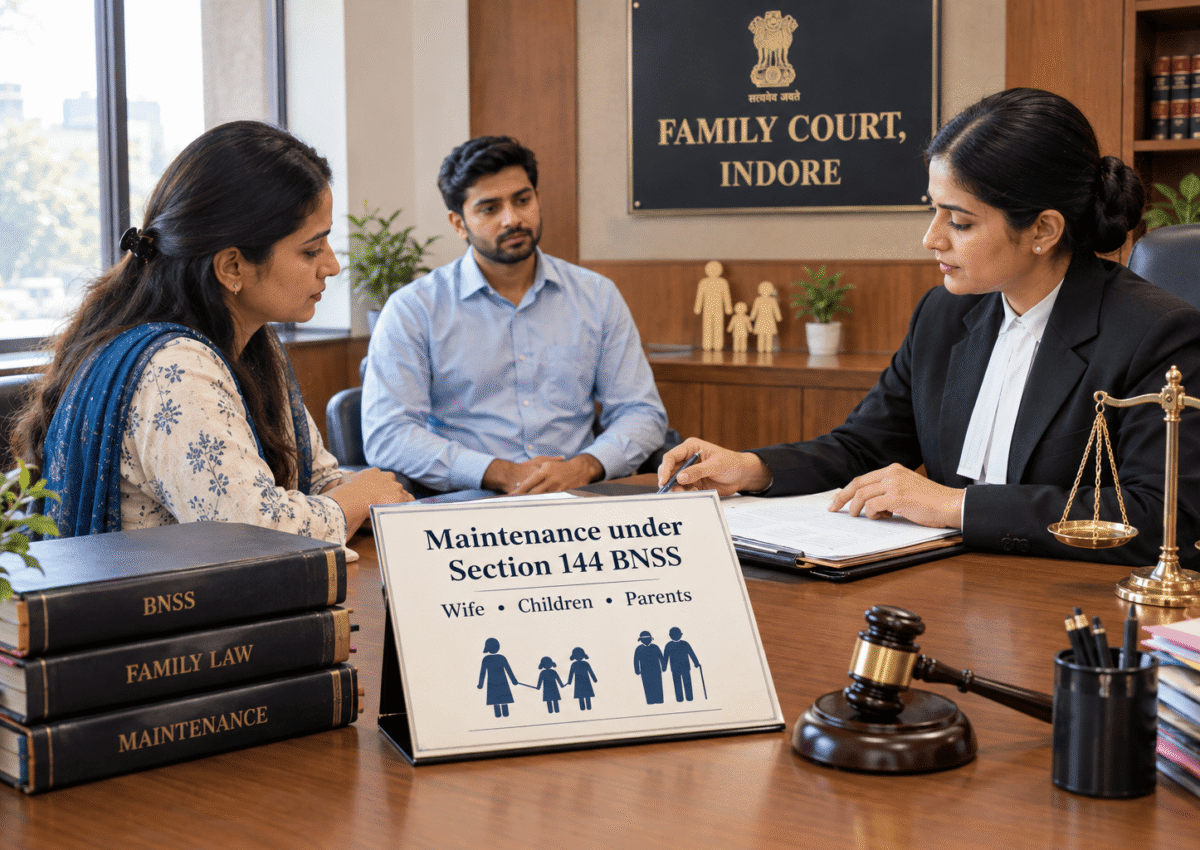
How to Resolve Disputes With Your Wife Without Going to Court?
How to Resolve Disputes With Your Wife Without Going to Court: Practical Ways to Save Your Marriage
The best way to deal with a dispute with your wife without going to court is to first reduce hostility, communicate calmly, identify the actual source of the disagreement, and, where direct discussion fails, use mediation or counselling to reach a mutually acceptable settlement.
Marriage disputes can become complicated very quickly. A disagreement that begins with communication problems, financial issues, interference by relatives, differences regarding children, household responsibilities, or misunderstandings may eventually result in separation, complaints, maintenance proceedings, domestic violence allegations, or divorce litigation.
However, going to court is not always the first or best solution. In many matrimonial disputes, the parties can resolve their differences through communication, family intervention, counselling, mediation, negotiation, or a mutually agreed separation arrangement.
The objective should not merely be to “win” the dispute. The objective should be to determine whether the disagreement can be resolved in a way that protects dignity, financial interests, emotional well-being, and, where possible, the marriage itself.
1. Do Not Take Every Marital Disagreement to Court
Marriage naturally involves disagreements. Differences of opinion about money, family members, lifestyle, parenting, employment, residence, or personal expectations do not automatically require legal proceedings.
Court proceedings should generally be considered when the dispute has reached a stage where voluntary resolution is no longer realistically possible or where legal protection has become necessary.
If the disagreement is still capable of being resolved, litigation may sometimes make the situation more difficult because:
- communication between spouses may completely break down;
- relatives may become involved;
- allegations may become more serious;
- children may become caught between the parents;
- significant money may be spent on litigation;
- the parties may experience prolonged emotional stress; and
- reconciliation may become more difficult.
Therefore, before immediately filing a case, it is worth asking:
Can this problem be resolved through a structured discussion or mediation?
In many cases, the answer may be yes.
2. Identify the Real Cause of the Dispute
One of the biggest mistakes spouses make is arguing about the latest incident instead of addressing the underlying problem.
For example, an argument about a mobile phone may actually be about trust.
An argument about household expenses may actually be about financial insecurity.
An argument involving parents or in-laws may actually be about boundaries between the couple and their extended families.
An argument about spending time together may actually be about emotional neglect.
Therefore, instead of asking:
“Who was wrong in yesterday’s argument?”
ask:
“What is the actual problem that has been causing conflict between us?”
This change in approach can make a substantial difference.
3. Talk When Both of You Are Calm
Trying to resolve a matrimonial dispute while both spouses are angry usually makes matters worse.
Choose an appropriate time when neither spouse is under immediate pressure.
The discussion should preferably take place privately and without an audience of relatives, friends, children, or other people.
Instead of saying:
“You always behave like this.”
try saying:
“I feel that this particular situation is creating a serious problem between us, and I want us to find a solution.”
The objective is to discuss the problem, rather than attack the person.
4. Listen to Your Wife’s Side
Resolution is impossible if one spouse only wants to speak and does not want to listen.
Your wife may have concerns that you do not fully understand. Similarly, you may have concerns that she does not understand.
A useful discussion should therefore give both spouses an opportunity to explain:
- what is bothering them;
- what they expect from the marriage;
- what they believe has gone wrong;
- what they are willing to change;
- what they cannot accept; and
- what they would like the future relationship to look like.
Listening does not necessarily mean agreeing.
It means understanding the other person’s position before responding.
5. Do Not Bring Every Past Mistake Into the Present Argument
A common pattern in matrimonial disputes is:
Issue → argument → old issue → older issue → allegations → anger → complete breakdown of communication.
This rarely solves anything.
If the current issue is about finances, there may be little benefit in reopening an argument that happened five years ago.
If every discussion becomes a collection of historical grievances, neither spouse will feel heard.
Try dealing with one issue at a time.
6. Set Boundaries With Relatives
Many matrimonial disputes become more complicated because parents, siblings, friends, or other relatives become directly involved.
Family members may have good intentions, but excessive interference can sometimes make reconciliation harder.
A married couple should, as far as reasonably possible, have some private space to resolve their disagreements.
This does not mean that genuine support from parents or relatives should be rejected. It means that the couple should decide who should participate in the dispute and to what extent.
7. Consider Marriage Counselling
Marriage counselling can be useful where the problem is primarily related to:
- communication;
- anger;
- mistrust;
- emotional distance;
- recurring arguments;
- financial disagreements;
- parenting differences;
- interference by relatives;
- expectations from marriage; or
- difficulty rebuilding the relationship after a serious disagreement.
Counselling is not necessarily an admission that either spouse is at fault.
It can simply provide a structured environment in which both spouses can communicate.
8. Consider Mediation Before Litigation
Mediation is one of the most useful alternatives to matrimonial litigation when both spouses are willing to negotiate.
A neutral mediator facilitates communication between the parties and helps them explore possible solutions.
The mediator does not normally decide who is right or wrong in the way a court decides a contested case.
Depending upon the circumstances, mediation may address matters such as:
- reconciliation;
- separate residence;
- financial arrangements;
- household responsibilities;
- communication between spouses;
- children’s education;
- parenting arrangements;
- maintenance;
- return of belongings;
- withdrawal or non-pursuit of certain disputes;
- future interaction between the parties; and
- mutually agreed separation or divorce-related arrangements.
The exact legal consequences of any settlement should, however, be carefully examined before it is signed.
9. Use a Neutral and Sensible Person if Family Discussion Is Necessary
Sometimes the spouses cannot communicate effectively without assistance.
In such a situation, a mature and neutral family member may help.
However, the person should ideally be someone who:
- understands both sides;
- does not automatically support one spouse;
- does not provoke either party;
- respects confidentiality;
- is interested in resolving the dispute rather than escalating it.
A family meeting should not become a courtroom where ten relatives sit together and decide who is guilty.
Its purpose should be resolution, not humiliation.
10. Do Not Use Threats of Divorce or Police Cases During Every Argument
Threatening legal action during every disagreement can destroy trust.
Statements such as:
“I will file a case against you.”
or
“You will see what happens when I go to court.”
may turn an ordinary matrimonial dispute into a serious legal conflict.
Legal remedies certainly exist where required. But they should not ordinarily be used as a weapon during routine marital arguments.
If a genuine legal issue exists, it is better to obtain private legal advice and understand the available remedies rather than repeatedly threatening the other spouse.
11. Keep Children Away From the Conflict
Children should not be used as messengers, weapons, or witnesses in ordinary marital disagreements.
Avoid statements such as:
- “Tell your mother…”
- “Tell your father…”
- “Your mother is responsible for this.”
- “Your father doesn’t care about us.”
Children can suffer significantly when they are repeatedly exposed to parental conflict.
Even if the marriage is going through a difficult period, both parents should, wherever possible, protect the child’s emotional security.
12. Deal With Financial Disputes Transparently
Money is one of the most common sources of marital disagreement.
Arguments may involve:
- income;
- household expenses;
- loans;
- savings;
- property;
- investments;
- business losses;
- financial support to parents;
- personal expenditure; or
- expectations regarding lifestyle.
A practical solution may be to create a transparent financial arrangement.
For example, spouses may decide:
- who will pay particular household expenses;
- how savings will be handled;
- how children’s expenses will be shared;
- what amount will be available for personal expenditure;
- how major purchases will be decided.
Financial transparency can prevent many unnecessary misunderstandings.
13. Do Not Publicly Discuss Your Matrimonial Dispute
Social media can turn a private matrimonial disagreement into a public conflict.
Posting allegations against your spouse on:
- Facebook;
- Instagram;
- WhatsApp;
- YouTube; or
- other social platforms
can permanently damage the possibility of reconciliation and may also create legal complications.
It is usually better to resolve matrimonial disputes privately rather than seeking public validation.
14. If You Have Made a Mistake, Acknowledge It
Sometimes the fastest way to end an argument is to stop trying to prove that you are completely right.
A genuine apology can be powerful.
There is a significant difference between:
“I’m sorry you felt bad.”
and:
“I realise that what I said was wrong and that it hurt you. I am sorry.”
An apology does not necessarily mean accepting every allegation made against you. It can simply acknowledge your own conduct where you genuinely believe you were wrong.
15. Create Specific Rules for Future Disagreements
If the same dispute keeps returning, merely saying “we will not fight again” may not be enough.
Instead, agree on practical rules.
For example:
- No shouting.
- No abusive language.
- No physical aggression.
- No arguments in front of children.
- No involving relatives unnecessarily.
- No social-media posts about matrimonial disputes.
- Take a break if the argument becomes uncontrollable.
- Discuss major financial decisions together.
- Revisit unresolved issues when both parties are calm.
These simple rules can significantly improve communication.
16. If Separation Is Necessary, Consider an Amicable Arrangement
Sometimes the marriage has reached a stage where living together is no longer workable.
Even then, the parties do not necessarily have to immediately begin a bitter court battle.
Depending upon the circumstances, they may explore an amicable arrangement concerning:
- separate residence;
- financial responsibilities;
- children’s education and care;
- visitation;
- personal belongings;
- property-related issues;
- maintenance;
- future communication; and
- mutually agreed legal proceedings, if ultimately required.
Where divorce is contemplated and the statutory requirements are satisfied, mutual consent divorce may provide a considerably less adversarial route than prolonged contested litigation.
However, a mutual settlement should be carefully drafted after understanding its legal consequences.
17. When You Should Not Try to Resolve the Matter Privately
Avoid the idea that every matrimonial dispute must be settled inside the family.
There are circumstances where legal protection and professional advice may be necessary.
For example, where there is:
- physical violence;
- serious threats;
- coercion;
- intimidation;
- serious domestic abuse;
- risk to children;
- financial exploitation;
- forced eviction;
- stalking or harassment;
- serious criminal allegations; or
- an immediate threat to personal safety.
In such situations, safety should come before reconciliation.
A person should not be pressured into an unsafe private settlement merely because the dispute is matrimonial.
18. Take Legal Advice Even If You Do Not Want to Go to Court
Consulting a lawyer does not mean that you have decided to file a case.
Sometimes the most useful role of a matrimonial lawyer is to explain:
“What are my legal rights and what should I avoid doing?”
A lawyer can help you understand the possible consequences of different decisions and may also assist in negotiating a settlement.
For example, before signing a settlement, transferring property, agreeing to a financial arrangement, withdrawing a complaint, or making a legally significant undertaking, it may be prudent to obtain independent legal advice.
This can prevent a person from making an emotional decision that creates a much bigger legal problem later.
The Golden Rule: Solve the Problem, Not the Person
A matrimonial dispute becomes particularly difficult when spouses begin viewing each other as opponents.
The better approach is:
Problem versus couple, rather than husband versus wife.
Instead of:
“How can I prove that my wife is wrong?”
ask:
“How can we resolve this problem without causing permanent damage to our relationship?”
That change in mindset can sometimes completely alter the direction of a matrimonial dispute.
Can a Husband and Wife Resolve Their Dispute Without Going to Court?
Yes. Many matrimonial disputes can be resolved without filing contested court proceedings through direct communication, counselling, family intervention, mediation, negotiation, or a mutually agreed settlement, provided both parties are willing and there are no circumstances requiring immediate legal protection.
The important point is that avoiding court should not mean ignoring a serious legal problem. The right approach depends upon the nature and seriousness of the dispute.
Frequently Asked Questions
Can I resolve a matrimonial dispute without filing a case?
Yes. Depending upon the circumstances, spouses can attempt direct negotiation, counselling, mediation, or a mutually agreed settlement before initiating litigation.
Is mediation better than going to court in a matrimonial dispute?
Mediation can be beneficial where both spouses are willing to communicate and negotiate. It can provide a more private and flexible environment for discussing practical solutions.
Should I involve my parents in a dispute with my wife?
Parents can sometimes help, but excessive family involvement may escalate the dispute. If relatives are involved, it is preferable to involve people who are mature, neutral, and genuinely interested in resolution.
What if my wife is not willing to talk to me?
Do not repeatedly force communication. Depending upon the circumstances, a neutral mediator, counsellor, mutually trusted person, or lawyer may help establish a structured channel of communication.
Should I threaten my wife with divorce to make her agree?
Generally, no. Threatening divorce or criminal proceedings during arguments can escalate the conflict and may make reconciliation more difficult.
Can a lawyer help even if I don’t want to go to court?
Yes. A lawyer can explain your legal position, advise you regarding your rights and obligations, review a proposed settlement, and assist with negotiation or mediation without necessarily initiating litigation.
What if there is violence or a serious threat?
In such circumstances, avoiding court should not become the primary objective. Personal safety comes first. Appropriate legal and protective remedies should be considered based on the facts of the case.
Final Thoughts
Every matrimonial dispute does not have to become a court battle. In many situations, calm communication, clearly defined boundaries, counselling, mediation and sensible negotiation can resolve disputes more effectively than prolonged litigation.
At the same time, reconciliation should never mean tolerating violence, serious abuse, intimidation or unlawful conduct.
The wisest approach is often to understand both the personal and legal dimensions of the dispute before taking an irreversible step. A person can seek legal advice, understand his or her rights, and still make a genuine effort to resolve the matrimonial problem amicably.
For a husband and wife who genuinely want to preserve their relationship, the first question should not always be “Which case should I file?” It can sometimes be:
“Is there a sensible way for both of us to resolve this problem without destroying the relationship?”
Disclaimer: This information is intended for general guidance only and does not constitute legal advice. Please consult with a qualified lawyer for personalized advice specific to your situation.
Advocate J.S. Rohilla (Civil & Criminal Lawyer in Indore)
Contact: 88271 22304
