
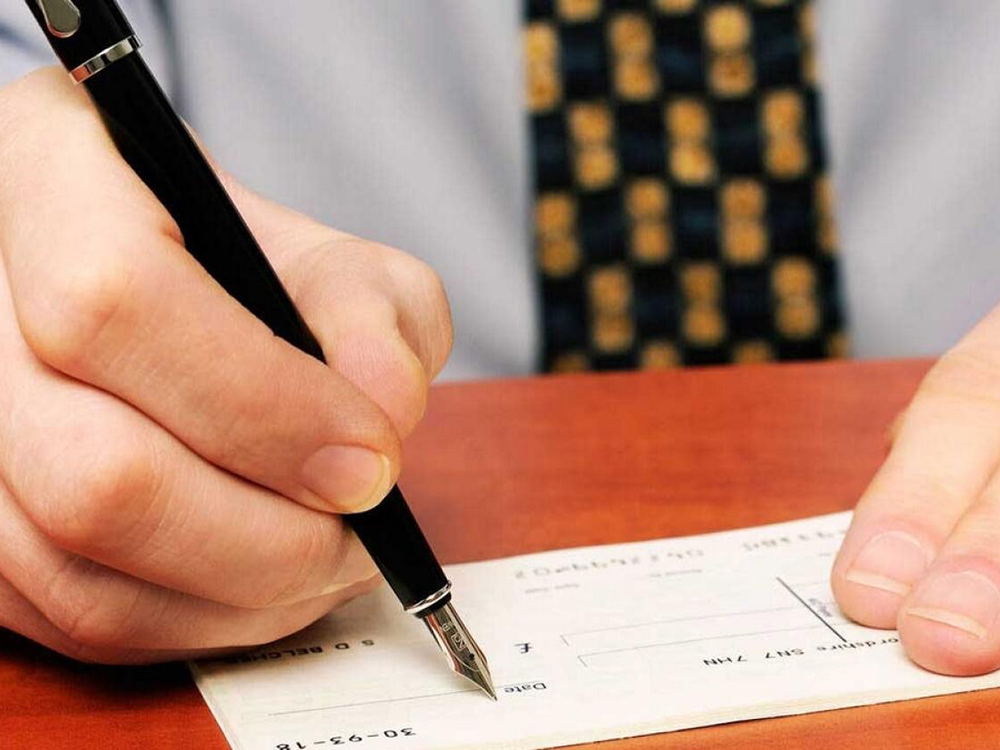
How to File a Cheque Bounce Case in Indore?
When a cheque issued towards payment of a legally enforceable debt or liability is dishonoured, the payee or holder in due course may initiate proceedings under Section 138 of the Negotiable Instruments Act, 1881, provided all statutory requirements are fulfilled.
To file a cheque bounce case in Indore, the payee must first confirm the dishonour and underlying legally enforceable liability, issue the statutory demand notice within the prescribed period, wait for the statutory 15-day payment period after receipt of notice, and, if payment is not made, file a written complaint under Section 138 before the competent court having territorial jurisdiction within the prescribed limitation period.
Filing a cheque bounce case is therefore not simply a matter of submitting the dishonoured cheque to a court. There is a prescribed sequence of legal steps, and missing any important statutory requirement can seriously affect the maintainability of the complaint.
For a person seeking to file a cheque bounce case in Indore, the most important issues are the cheque, the underlying debt, dishonour, statutory notice, 15-day waiting period, limitation, territorial jurisdiction, supporting documents and proper drafting of the complaint.
1. What is a cheque bounce case?
A cheque bounce case generally refers to proceedings initiated under Section 138 of the Negotiable Instruments Act, 1881 when a cheque issued towards a legally enforceable debt or liability is returned unpaid and the drawer fails to make payment after receiving the statutory demand notice.
Section 138 prescribes specific statutory conditions. Among other things, the cheque must have been presented within the applicable validity period, a demand notice must ordinarily be issued within 30 days of receiving information of dishonour, and the drawer must fail to pay within 15 days of receiving the notice.
Thus, the mere fact that a bank has returned a cheque unpaid does not automatically mean that a Section 138 offence is complete.
2. Who can file a cheque bounce case?
Section 142 provides that cognizance of an offence under Section 138 is taken upon a written complaint made by:
- The payee; or
- The holder in due course of the cheque.
The complaint must comply with the statutory requirements concerning limitation and jurisdiction.
For example, if A issues a cheque to B towards repayment of a legally enforceable debt and the cheque is dishonoured, B can ordinarily be the complainant, subject to the statutory requirements.
3. Step 1 – Present the cheque to the bank
The first step is to present the cheque for encashment.
The cheque should be presented within the period of its validity applicable under banking law and the Negotiable Instruments Act.
If the cheque is returned unpaid, obtain the cheque return memo or other bank document recording the dishonour.
The return memo is an important document because it establishes:
- Cheque presentation;
- Date of dishonour;
- Bank;
- Reason for dishonour.
The exact reason for dishonour should be examined before deciding the next legal step.
4. Step 2 – Examine the reason for dishonour
The bank may return the cheque for reasons such as:
- Insufficient funds;
- Exceeds arrangement;
- Account closed;
- Payment stopped;
- Refer to drawer;
- Other reasons recognised in banking practice.
The legal effect of the reason should be examined in the context of Section 138.
A complainant should therefore not simply state:
“The cheque bounced.”
The complaint should contain the relevant facts concerning presentation and dishonour.
5. Step 3 – Establish the legally enforceable debt
This is one of the most important stages before filing the complaint.
The cheque should have been issued towards discharge, wholly or partly, of a legally enforceable debt or other liability.
The underlying liability may arise from:
- Loan;
- Business transaction;
- Sale of goods;
- Supply of material;
- Services;
- Advance;
- Contract;
- Settlement;
- Outstanding invoices;
- Other legally enforceable financial liability.
For example:
A supplies goods worth ₹15 lakh to B.
B accepts the liability and issues a cheque for ₹15 lakh.
The cheque is dishonoured.
A should preserve the documents showing:
- Supply;
- Invoice;
- Delivery;
- Outstanding amount;
- Cheque;
- Dishonour.
The cheque should not be viewed in isolation from the underlying transaction.
6. Section 139 presumption
Section 139 is an important provision in cheque bounce litigation.
Once the relevant foundational facts are established, the law provides a rebuttable presumption in favour of the holder that the cheque was received towards discharge of a debt or liability.
The presumption is not absolute.
The accused can attempt to rebut it by raising a probable defence.
Therefore, even though Section 139 is important for the complainant, the complainant should still prepare the underlying documentary evidence carefully.
7. Step 4 – Obtain the cheque return memo
After dishonour, obtain and preserve:
- Original cheque;
- Cheque return memo;
- Bank statement;
- Deposit slip, if available;
- Relevant banking communication.
The date on which information regarding dishonour is received is particularly important because it affects calculation of the statutory notice period.
8. Step 5 – Send the statutory legal notice
This is one of the most important steps.
Under Section 138, the payee or holder must ordinarily issue a written demand notice within 30 days from receipt of information from the bank regarding the return of the cheque unpaid.
The notice must demand payment of the cheque amount.
This statutory requirement should be treated seriously because failure to comply with the notice requirement can affect the Section 138 proceeding.
9. What should the cheque bounce legal notice contain?
A properly drafted notice should ordinarily mention:
Details of the drawer
- Full name;
- Address;
- Company/firm details, where applicable.
Details of the cheque
- Cheque number;
- Date;
- Amount;
- Bank;
- Branch.
Transaction details
- Why the cheque was issued;
- Amount due;
- Date of transaction;
- Relevant agreement/invoice/loan details.
Dishonour details
- Date of presentation;
- Date of return;
- Bank return memo;
- Reason for dishonour.
Statutory demand
The drawer should be called upon to pay the cheque amount within the statutory period.
Consequences of non-payment
The notice should make clear that failure to make payment may result in proceedings under Section 138 and other legally available remedies.
10. Should the legal notice demand only the cheque amount?
For the purpose of Section 138, the statutory demand must be properly structured around the cheque amount.
A lawyer should be careful where the creditor also wants to claim:
- Interest;
- Legal expenses;
- Other outstanding amounts;
- Damages.
The notice should clearly distinguish the statutory demand from other claims.
An inaccurately drafted notice can create avoidable litigation issues.
11. How should the notice be sent?
The notice should be sent through a mode that provides reliable proof of dispatch and delivery.
Depending upon the circumstances, the advocate may use:
- Registered post;
- Speed post;
- Courier;
- Other legally recognised means of service;
- Electronic communication where legally appropriate and properly supported.
The advocate should preserve:
- Postal receipt;
- Tracking report;
- Delivery report;
- Returned envelope;
- Electronic proof, where relied upon.
The precise method should be selected keeping in mind proof of service.
12. What happens after the legal notice?
The drawer receives the statutory opportunity to make payment.
The drawer has 15 days from receipt of the statutory notice to make the required payment.
If payment is made within that statutory period, the cause of action for prosecution under Section 138 in respect of that dishonour does not arise in the ordinary course.
If payment is not made within the prescribed period, the cause of action arises thereafter.
13. Can the cheque bounce complaint be filed immediately after sending notice?
No.
This is a very important practical point.
The complainant should not file the Section 138 complaint merely because the legal notice has been sent.
The statutory 15-day period after receipt of notice must be allowed to expire.
The Supreme Court has made it clear that a complaint filed before expiry of the statutory 15-day period is premature.
Therefore:
Dishonour → Notice → Receipt of notice → Wait 15 days → Cause of action → Calculate complaint limitation → File complaint.
14. Step 6 – Calculate the limitation for filing the complaint
After the drawer fails to pay within the statutory period, the complainant should calculate the limitation carefully.
Section 142 provides that the complaint should be made within one month from the date on which the cause of action arises, subject to the statutory provision permitting condonation where sufficient cause for delay is established.
This calculation should be done carefully rather than relying on an approximate date.
The High Court of Madhya Pradesh itself provides a specific limitation calculator for Section 138 complaints, taking into account dates such as cheque presentation, dishonour intimation, notice, service/presumption and filing.
15. Important: civil limitation and Section 138 limitation are different
A person should not confuse:
limitation for the Section 138 complaint
with
limitation for a civil recovery claim based upon the underlying debt.
They are separate legal questions.
If the creditor also wants to pursue civil recovery, the limitation applicable to that claim should be independently examined.
16. Step 7 – Determine whether the Indore court has jurisdiction
This is particularly important.
A cheque bounce complaint cannot be filed in any court merely because the complainant lives in Indore.
Section 142(2) contains specific rules concerning territorial jurisdiction.
Where the cheque is delivered for collection through an account, jurisdiction is generally connected with the branch of the bank where the payee or holder maintains the account.
Where the cheque is presented otherwise through an account, Section 142(2)(b) refers to the branch of the drawee bank where the drawer maintains the account.
17. What if the cheque was issued outside Indore?
A cheque can be issued outside Indore and still potentially give rise to jurisdiction in Indore.
This is an important point.
The Supreme Court’s decision in Bridgestone India Pvt. Ltd. v. Inderpal Singh specifically dealt with a cheque drawn on a bank in Chandigarh but presented for collection at IDBI Bank, Indore.
The Supreme Court held that, under the amended Section 142(2), the Judicial Magistrate First Class at Indore had territorial jurisdiction in that case because the cheque was delivered for collection through the payee’s bank account at Indore.
Therefore:
The place where the drawer signed or issued the cheque is not necessarily the place where the Section 138 complaint must be filed.
The statutory jurisdictional provisions must be examined.
18. Recent Supreme Court clarification on jurisdiction
The jurisdiction provisions should be read carefully because Section 142(2) contains specific statutory rules.
The Supreme Court has continued to examine the operation of Section 142(2), including the distinction between account-payee and other forms of presentation and the concept of the payee’s home branch.
Therefore, before filing a complaint where banking arrangements involve different cities or branches, the advocate should examine the exact mode of presentation and applicable Section 142(2) rule rather than assuming jurisdiction merely from the place of transaction.
This becomes especially important where:
- Drawer is in another State;
- Cheque was issued outside Madhya Pradesh;
- Drawer bank is outside Indore;
- Payee has a bank account in Indore;
- Cheque was collected electronically;
- Multiple branches are involved.
19. Step 8 – Identify the competent court in Indore
A Section 138 complaint is to be tried by a court of the level prescribed by Section 142.
The complaint should therefore be presented before the competent criminal court having jurisdiction over the relevant location.
The exact court/roster applicable on the date of filing should be verified from the prevailing court administration because judicial assignments can change.
The advocate should not simply mention “Indore Court” without identifying the legally competent court.
20. Step 9 – Prepare the Section 138 complaint
A cheque bounce complaint should be carefully drafted.
A proper complaint will ordinarily contain:
A. Particulars of complainant
- Name;
- Address;
- Status;
- Contact details as required.
B. Particulars of accused
- Name;
- Address;
- Company/firm details, if applicable.
C. Transaction
Explain:
- How the liability arose;
- Amount due;
- Date of transaction;
- Relevant agreement/invoice/loan.
D. Issuance of cheque
Mention:
- Cheque number;
- Date;
- Amount;
- Bank;
- Circumstances of issuance.
E. Presentation
State:
- Where it was presented;
- Date of presentation.
F. Dishonour
Mention:
- Date;
- Return memo;
- Reason for dishonour.
G. Statutory notice
State:
- Date of notice;
- Mode of dispatch;
- Address;
- Date of delivery/service;
- Proof of service.
H. Failure to pay
State that the accused failed to make payment within the statutory period.
I. Cause of action
Explain when and how the cause of action arose.
J. Jurisdiction
Specifically explain why the chosen court has territorial jurisdiction.
K. Limitation
Mention the relevant dates and demonstrate that the complaint is within limitation or explain the statutory basis for condonation if applicable.
L. Prayer
Seek appropriate relief according to law.
21. Documents to be filed with the complaint
The documents will depend upon the transaction, but may include:
- Original cheque;
- Cheque return memo;
- Bank statement;
- Legal notice;
- Postal receipt;
- Tracking report;
- Returned envelope, if applicable;
- Agreement;
- Invoice;
- Loan document;
- Ledger;
- Account confirmation;
- Delivery documents;
- Relevant correspondence;
- WhatsApp/email records, where relied upon;
- Reply to notice, if received;
- Other documents supporting the underlying liability.
The original cheque is particularly important and should be preserved carefully.
22. What if the original cheque is lost?
This can create an evidentiary problem.
The complainant should immediately inform the bank where appropriate and preserve evidence concerning:
- Cheque number;
- Copy/scan of cheque;
- Bank records;
- Return memo;
- Circumstances of loss.
The appropriate legal course will depend upon the facts.
A complainant should never casually assume that a photocopy can simply replace the original cheque in every situation.
23. Step 10 – File the complaint
Once:
- cheque has been dishonoured;
- notice has been properly issued;
- statutory 15-day period has expired without payment;
- limitation has been calculated;
- jurisdiction has been established;
- documents have been prepared;
the complaint can be filed before the competent court.
The court will then deal with the complaint according to the applicable procedure.
24. Filing in Indore: e-filing and current MP High Court position
There is an important distinction here.
The High Court of Madhya Pradesh issued Circular No. 13/PR(J)/2024 stating that e-filing along with submission of hard copies would be mandatory from 1 July 2024 for specified categories, expressly including complaints under Section 138 of the NI Act, at the Principal Seat and the Indore and Gwalior Benches.
The High Court’s e-filing portal also provides the filing procedure and describes stages including filing, indexing, lower court, court fees, limitation and generation of the filing ID.
However, a Section 138 complaint before the competent trial court in Indore should not be confused with filing a Section 138 matter before the High Court of Madhya Pradesh, Indore Bench.
The applicable filing procedure depends upon the court in which the proceeding is actually being instituted.
25. Step 11 – Preliminary scrutiny by the court
After filing, the complaint and accompanying documents may be scrutinised for:
- Maintainability;
- Limitation;
- Jurisdiction;
- Required documents;
- Court fee/process requirements;
- Proper identification of parties;
- Other procedural requirements.
If defects are pointed out, they should be cured promptly.
26. Step 12 – Summoning of the accused
If the court proceeds with the complaint in accordance with law and is satisfied that the statutory requirements for issuance of process are met, summons may be issued to the accused.
The complainant should provide an accurate and serviceable address.
Incorrect addresses can cause unnecessary delay.
Where the accused is:
- Outside Indore;
- In another district;
- In another State;
- A company;
- A partnership firm;
the service strategy should be prepared carefully.
27. What happens after summons?
Once the accused appears or is otherwise brought before the court, the case proceeds according to the applicable procedure.
The complainant may need to establish:
- Issuance of cheque;
- Dishonour;
- Statutory notice;
- Failure to pay;
- Legally enforceable liability;
- Other statutory ingredients.
The accused can raise legally sustainable defences.
28. What if the accused does not appear?
If the accused does not appear despite proper service and court directions, the court may take appropriate procedural steps.
The exact action depends upon:
- Whether summons were properly served;
- Court orders;
- Previous appearances;
- Exemption applications;
- Conduct of the accused.
The complainant should keep track of every order rather than simply waiting for dates.
29. Can the complainant seek interim compensation?
Yes.
Section 143A permits the court to order interim compensation in specified circumstances.
The statutory provision allows interim compensation of up to 20% of the cheque amount, subject to the conditions of the section.
It is important, however, not to describe 20% as an automatic entitlement in every case.
The court must consider the statutory framework applicable to the proceeding.
30. Can the cheque be presented again before filing the case?
Yes, in appropriate circumstances.
The Supreme Court in MSR Leathers v. S. Palaniappan recognised that a cheque may be presented more than once during its validity period and that a subsequent dishonour can, subject to the statutory conditions, give rise to a fresh cause of action.
Therefore, if the drawer requests another presentation and the cheque remains valid, the complainant may consider whether re-presentation is appropriate.
However, the statutory periods must be calculated carefully from the relevant dishonour.
31. Should I file immediately after the first dishonour?
Not necessarily.
The decision depends upon the circumstances.
For example, if the drawer asks:
“Please present the cheque again; I will arrange the funds.”
the payee may consider re-presentation.
But if the drawer is clearly avoiding payment, repeated presentations may simply delay legal action.
The advocate should consider:
- Remaining cheque validity;
- Amount involved;
- Conduct of drawer;
- Previous assurances;
- Limitation;
- Settlement possibility.
32. What if the cheque was a security cheque?
A cheque described as a “security cheque” is not automatically outside Section 138.
The court may examine whether a legally enforceable liability existed when the cheque was presented.
The complainant should therefore establish:
- Original transaction;
- Amount due;
- Contractual terms;
- Payments already made;
- Circumstances of presentation.
The drawer may raise a defence concerning the nature of the cheque, but the label alone does not determine the result.
33. What if the cheque was blank when given?
The accused may contend that a signed blank cheque was misused.
The court may examine the complete circumstances.
The complainant should be prepared to explain:
- Why the cheque was given;
- When it was given;
- What liability existed;
- How the amount was determined;
- Why the cheque was presented.
The underlying transaction remains important.
34. What if payment was stopped?
A stop-payment instruction does not automatically defeat a Section 138 case.
The legal effect depends upon the circumstances and whether the statutory ingredients are otherwise satisfied.
Therefore, the complainant should not assume that “payment stopped” means that legal proceedings are impossible.
35. What if the accused claims there was no debt?
The complainant should be prepared to prove the transaction and rely upon the statutory presumption where applicable.
Section 139 creates a rebuttable presumption in favour of the holder.
The accused can attempt to rebut that presumption by raising a probable defence.
This is why documentary evidence concerning the underlying transaction is extremely important.
36. What if the cheque was issued by a company?
If a company issued the cheque, Section 141 becomes relevant.
The complaint should carefully identify:
- Company;
- Signatory;
- Directors/officers sought to be prosecuted;
- Their role;
- Responsibility for conduct of business;
- Circumstances of cheque issuance.
A complaint should not mechanically name every director.
The statutory requirements applicable to persons other than the company must be examined carefully.
37. What if the cheque was issued by a partnership firm?
Where the drawer is a partnership firm, the complaint should examine:
- Firm’s name;
- Partners;
- Signatory;
- Person responsible for business;
- Partnership deed;
- Transaction documents.
Again, the legal basis for proceeding against individual partners should be properly pleaded.
38. What if the accused lives outside Madhya Pradesh?
The accused’s residence outside Madhya Pradesh does not by itself prevent a Section 138 complaint from being filed in Indore if the statutory territorial jurisdiction lies in Indore.
The jurisdiction must be established under Section 142(2).
The Supreme Court’s decision in Bridgestone demonstrates that the location of the payee’s relevant bank branch can determine jurisdiction in an account-based presentation under Section 142(2)(a).
39. Can a Section 138 complaint be filed in Indore if the cheque was issued in another State?
Yes, potentially.
For example:
- Drawer: Delhi;
- Drawer bank: Delhi;
- Cheque issued in Delhi;
- Payee’s account: Indore;
- Cheque delivered for collection through the relevant account in Indore.
Depending upon the manner of presentation and the statutory jurisdictional rule, the competent court in Indore may have jurisdiction.
The precise banking facts should be checked before filing.
40. Can I file a civil recovery case along with the cheque bounce case?
Depending upon the underlying transaction, yes.
Possible civil/commercial remedies may include:
- Ordinary recovery suit;
- Summary suit under Order XXXVII CPC where maintainable;
- Commercial suit;
- Arbitration;
- Other contractual remedies.
The civil limitation should be calculated separately.
The creditor must also avoid double recovery.
41. Can the cheque bounce case be settled?
Yes.
Section 147 makes offences under the Negotiable Instruments Act compoundable.
Settlement may occur:
- Before filing;
- After notice;
- During the court case;
- During evidence;
- After conviction;
- During appeal,
subject to the applicable procedure.
A sensible settlement agreement should clearly record:
- Total settlement amount;
- Payment schedule;
- Amount already received;
- Remaining amount;
- Consequences of default;
- Status of pending litigation.
42. What if the drawer pays after the complaint is filed?
Payment after filing does not necessarily mean that the complainant should immediately withdraw the case without examining the legal consequences.
The parties may consider compounding/settlement in accordance with law.
If payment is only partial, the settlement should clearly record the balance and consequences of default.
43. What if the drawer does not have money?
Filing the complaint and obtaining a favourable result are different from actual recovery.
Where the amount is substantial, the creditor should consider the debtor’s:
- Business;
- Property;
- Receivables;
- Employment;
- Other legally identifiable assets.
The creditor cannot personally seize the debtor’s property.
Recovery must take place through lawful court mechanisms.
44. What if the cheque amount is very large?
For high-value cheques, the complainant should undertake a complete legal review before filing.
For example, if the cheque is for ₹50 lakh or ₹1 crore, the lawyer should examine:
- Source of transaction;
- Agreement;
- Bank records;
- Invoices;
- GST documents;
- Ledger;
- Acknowledgments;
- Income/accounting records;
- Cheque;
- Return memo;
- Legal notice.
Where appropriate, civil/commercial recovery should also be considered.
45. Practical checklist for filing a cheque bounce case in Indore
Before filing, verify all of the following:
Cheque
☐ Original cheque available
☐ Correct cheque number
☐ Correct date
☐ Correct amount
☐ Drawer details verified
Dishonour
☐ Cheque presented within applicable validity
☐ Return memo obtained
☐ Date of dishonour recorded
☐ Reason for dishonour recorded
Liability
☐ Underlying debt identified
☐ Transaction documents available
☐ Amount due calculated
☐ Previous payments accounted for
Notice
☐ Notice issued within 30 days
☐ Correct address used
☐ Cheque amount demanded properly
☐ Proof of dispatch preserved
☐ Proof of delivery/service preserved
Waiting period
☐ Notice received/service established
☐ 15-day statutory period completed
☐ Payment not received
Limitation
☐ Cause of action date calculated
☐ One-month complaint limitation calculated
☐ Delay, if any, legally explained
Jurisdiction
☐ Section 142(2) examined
☐ Relevant bank branch identified
☐ Indore jurisdiction established
Complaint
☐ Correct complainant
☐ Correct accused
☐ Transaction pleaded
☐ Cheque pleaded
☐ Dishonour pleaded
☐ Notice pleaded
☐ Non-payment pleaded
☐ Limitation pleaded
☐ Jurisdiction pleaded
☐ Documents indexed
☐ Appropriate prayer included
46. Common mistakes when filing a cheque bounce case
Mistake 1: Filing before 15 days expire
This can make the complaint premature.
Mistake 2: Missing the 30-day notice period
The statutory notice period must be calculated carefully.
Mistake 3: Missing complaint limitation
Section 142 provides a one-month limitation from the cause of action, subject to its proviso concerning sufficient cause.
Mistake 4: Filing in the wrong court
Indore jurisdiction should be established under Section 142(2).
Mistake 5: Giving an incorrect address
This can delay summons.
Mistake 6: Failing to prove the underlying transaction
The cheque should be supported by the relevant transaction evidence.
Mistake 7: Making inconsistent statements
The legal notice, complaint and evidence should be consistent.
Mistake 8: Ignoring civil remedies
A substantial underlying debt may justify examining civil/commercial recovery separately.
Mistake 9: Assuming that every security cheque is useless
That is legally too broad.
Mistake 10: Assuming filing equals recovery
A litigation strategy should also consider settlement and eventual recovery.
47. Example: Filing a cheque bounce case in Indore
Suppose Mr. A, residing in Indore, supplies goods worth ₹20 lakh to Mr. B, who resides in Mumbai.
Mr. B issues a cheque for ₹20 lakh.
The cheque is deposited through Mr. A’s relevant bank account in Indore.
The cheque is returned unpaid.
Mr. A receives the bank’s intimation of dishonour.
The correct sequence would generally be:
1. Obtain the return memo.
2. Verify the underlying ₹20 lakh liability.
3. Issue the Section 138 notice within the statutory 30-day period.
4. Preserve proof of service.
5. Wait for the statutory 15-day period after receipt of notice.
6. If payment is not made, calculate the cause-of-action date.
7. Calculate the one-month complaint limitation.
8. Verify territorial jurisdiction under Section 142(2).
9. Prepare the Section 138 complaint.
10. Attach the cheque, return memo, notice and relevant supporting documents.
11. File before the competent court having jurisdiction.
12. Follow the court procedure after filing.
The fact that the accused lives in Mumbai does not, by itself, determine the jurisdiction.
48. How a lawyer should prepare a cheque bounce case
A properly prepared case should be approached chronologically.
The lawyer should prepare a date chart containing:
| Event | Date |
|---|---|
| Cheque date | ______ |
| Date of presentation | ______ |
| Date of dishonour | ______ |
| Date of bank intimation | ______ |
| Date of legal notice | ______ |
| Date of service | ______ |
| Expiry of 15 days | ______ |
| Cause of action | ______ |
| Last date for complaint | ______ |
| Actual filing date | ______ |
This simple exercise can prevent serious limitation mistakes.
49. Why jurisdiction should be checked before drafting
Jurisdiction should not be added as an afterthought.
The complaint should clearly explain the factual basis for Indore jurisdiction.
For example:
The complainant maintains his bank account at ______ Branch, Indore, and the cheque was delivered for collection through the said account.
The exact pleading must, however, correspond to the actual banking facts.
The Supreme Court in Bridgestone specifically recognised Indore jurisdiction in circumstances where the cheque was presented for collection at the payee’s bank in Indore.
50. Can I file the case myself?
A complainant may have the right to institute the complaint personally as payee/holder in due course.
However, cheque bounce litigation involves:
- Statutory limitation;
- Jurisdiction;
- Evidence;
- Presumptions;
- Cross-examination;
- Procedural requirements;
- Settlement;
- Possible civil/commercial remedies.
For a substantial cheque amount, professional legal assistance can therefore be valuable.
51. Frequently Asked Questions
How do I file a cheque bounce case in Indore?
First present the cheque, obtain the return memo after dishonour, issue the statutory demand notice within 30 days, wait for the statutory 15-day payment period after receipt of notice, and, if payment is not made, file a Section 138 complaint within the prescribed limitation before the competent court having jurisdiction.
How many days do I have to send the cheque bounce notice?
Ordinarily, the statutory notice must be issued within 30 days from receiving information from the bank regarding dishonour.
Can I file the complaint immediately after sending notice?
No. The statutory 15-day payment period after receipt of notice must be allowed to expire. A premature complaint can be legally defective.
How much time do I have to file the cheque bounce complaint?
Section 142 provides for filing within one month from the date the cause of action arises, subject to the statutory provision for condonation of delay for sufficient cause.
Can I file a cheque bounce case in Indore if the accused lives outside Indore?
Yes, potentially, if the statutory territorial jurisdiction under Section 142(2) lies in Indore.
Can a cheque issued outside Madhya Pradesh be prosecuted in Indore?
Yes, depending upon the statutory jurisdictional facts. The Supreme Court’s Bridgestone decision itself involved a cheque drawn in Chandigarh and presented at Indore.
Where should I file a cheque bounce case in Indore?
It should be filed before the competent court having jurisdiction under Section 142(2) and the prevailing court assignment.
Can I file a cheque bounce case if the cheque was a security cheque?
Possibly, depending upon whether a legally enforceable liability existed and the other statutory requirements are satisfied.
Can I present a bounced cheque again?
In appropriate circumstances, yes, during its validity period. The Supreme Court has recognised successive presentations subject to the statutory conditions.
Can I file a civil recovery case also?
Depending upon the underlying transaction and limitation, civil or commercial recovery proceedings may also be available.
Can I ask for interim compensation?
Yes. Section 143A permits interim compensation in specified circumstances, subject to its statutory requirements.
What if the accused pays after the case is filed?
The parties can consider settlement/compounding in accordance with law. The complainant should properly document the payment and settlement terms.
What if the accused refuses to appear?
The court may take appropriate procedural steps depending upon service and the accused’s conduct.
Can I settle a cheque bounce case?
Yes. Section 147 makes offences under the Negotiable Instruments Act compoundable.
Conclusion
Filing a cheque bounce case in Indore requires much more than simply taking a dishonoured cheque to court.
The correct legal sequence is generally: cheque presentation → dishonour → return memo → statutory notice within 30 days → service of notice → expiry of 15-day payment period → cause of action → calculation of limitation → determination of jurisdiction → preparation and filing of the Section 138 complaint before the competent court.
The two periods that a complainant must be particularly careful about are the 30-day period for issuing the statutory demand notice and the one-month period for filing the complaint after the cause of action arises, subject to the statutory rules concerning limitation and condonation.
For an Indore cheque bounce case, territorial jurisdiction under Section 142(2) is equally important. It should not be assumed merely because the complainant or accused resides in Indore. The relevant banking and presentation facts must be examined. The Supreme Court’s decision in Bridgestone India Pvt. Ltd. v. Inderpal Singh is particularly significant for Indore because the Court held that the Judicial Magistrate First Class, Indore had jurisdiction in the circumstances of that case.
Finally, a good cheque bounce case should be prepared with the entire transaction in mind. The cheque, return memo, legal notice and statutory compliance are important, but so are the documents establishing the underlying liability. Where the amount is substantial, the complainant should also consider whether a civil recovery suit, summary suit, commercial proceeding, arbitration or settlement strategy should accompany or supplement the Section 138 proceedings.
A carefully prepared complaint, filed within limitation and before the correct court, gives the complainant a much stronger foundation for pursuing recovery of the money legally due.
Disclaimer: This information is intended for general guidance only and does not constitute legal advice. Please consult with a qualified lawyer for personalized advice specific to your situation.
Advocate J.S. Rohilla (Civil & Criminal Lawyer in Indore)
Contact: 88271 22304
