
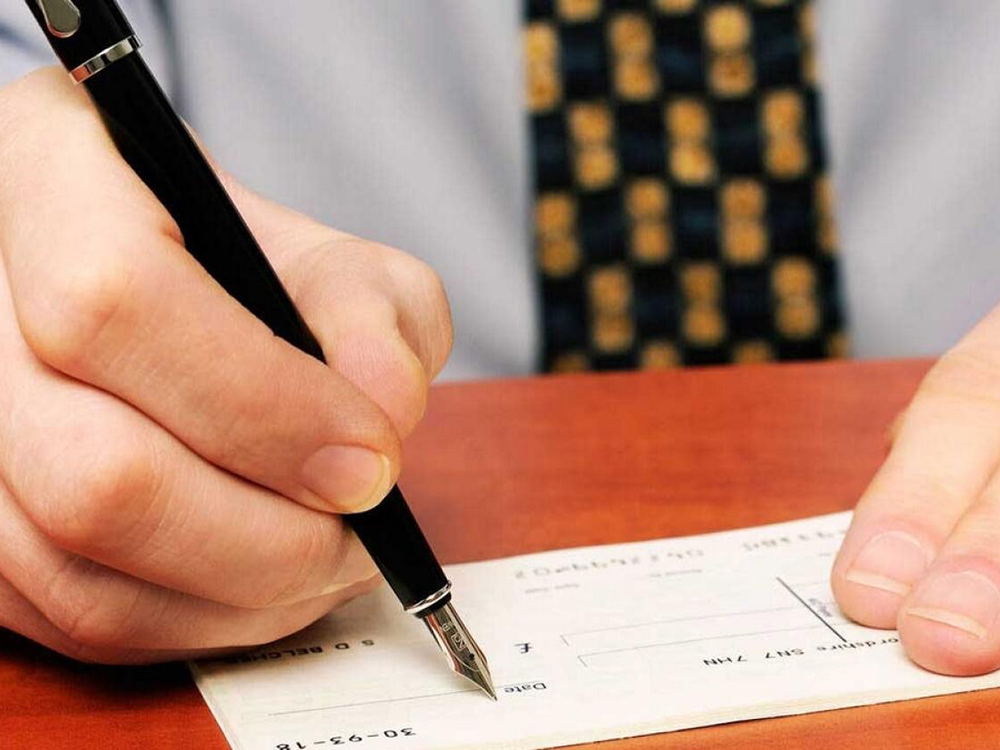
Civil Remedies for Cheque Bounce in Indore
When a cheque issued towards repayment of a loan, business liability, sale consideration, advance, professional payment or any other legally recoverable amount is dishonoured, the payee is not necessarily restricted to a criminal complaint under Section 138 of the Negotiable Instruments Act, 1881.
A person whose cheque has bounced may, depending upon the facts of the transaction, pursue civil remedies for recovery of the underlying debt, including an ordinary civil suit, a summary suit where legally maintainable, a commercial suit in an appropriate commercial dispute, arbitration where there is an arbitration agreement, or other appropriate contractual remedies.
The Supreme Court has specifically distinguished between the civil remedy for recovery of the cheque amount and the criminal prosecution under Section 138 of the Negotiable Instruments Act.
For a creditor in Indore, therefore, the important question is not merely “Has the cheque bounced?” but rather:
What was the underlying debt, what documents prove it, which civil remedy is available, what is the limitation period, and should the creditor simultaneously pursue Section 138 proceedings?
1. What is a civil remedy for cheque bounce?
A cheque itself is evidence of a payment instrument. The underlying liability may arise from a separate legal transaction.
For example:
- A lends ₹20 lakh to B.
- B issues a cheque for repayment.
- The cheque is dishonoured.
- A may have a cause of action based upon the underlying loan transaction.
- A may also have a statutory remedy under Section 138 of the Negotiable Instruments Act, provided its requirements are satisfied.
The civil proceeding is directed principally towards recovery of money.
The Section 138 proceeding, on the other hand, is a statutory criminal prosecution arising from dishonour of the cheque.
These remedies should therefore not be treated as identical.
2. Is a civil suit possible after cheque bounce?
Yes, a civil recovery proceeding can be maintainable even where the cheque has been dishonoured, provided an enforceable underlying debt or liability exists and the civil claim is otherwise within limitation.
The Supreme Court has observed that recovery of the cheque amount, strictly speaking, is enforceable through a civil suit, although in practice many complainants rely upon Section 138 proceedings because those proceedings can result in payment of the cheque amount through compensation or settlement.
Thus, the dishonour of a cheque does not automatically extinguish the underlying debt.
3. What are the major civil remedies available in Indore?
Depending upon the transaction, the creditor may consider one or more of the following:
- Ordinary civil suit for recovery of money
- Summary suit under Order XXXVII CPC, where applicable
- Commercial suit under the Commercial Courts Act, where the dispute qualifies
- Arbitration, where an arbitration agreement exists
- Suit based upon a written contract
- Suit based upon acknowledgment of liability
- Recovery proceedings based upon accounts or invoices
- Appropriate interim relief
- Pre-litigation mediation or settlement
- Lok Adalat/mediation where appropriate
The correct remedy depends upon the underlying transaction rather than simply the fact that a cheque was returned unpaid.
4. Ordinary civil suit for recovery of money
The most straightforward civil remedy may be a suit for recovery of money.
For example, suppose a businessman in Indore supplies machinery worth ₹30 lakh to another businessman.
The purchaser makes part-payment and later issues a cheque for the balance.
The cheque is dishonoured.
The supplier may have a civil claim based upon:
- Purchase order
- Invoice
- Delivery
- Agreement
- Outstanding ledger
- Acknowledgment of debt
- Cheque
- Bank return memo
- Correspondence between the parties
The suit would principally seek recovery of the legally due amount, together with such interest and costs as may be legally claimable.
5. Can I file a civil suit for the entire underlying debt?
This requires careful drafting.
The amount represented by the cheque may not always be identical to the total outstanding liability.
For example:
Total outstanding debt: ₹25 lakh
Cheque issued: ₹15 lakh
Other unpaid amount: ₹10 lakh
The legal strategy should therefore be based upon the complete statement of account and the underlying transaction.
A lawyer should determine:
- What amount was actually due?
- What amount was acknowledged?
- What amount was covered by the cheque?
- Whether any payment was subsequently made?
- Whether the cheque represented full and final settlement?
- Whether other amounts remained outstanding?
The plaint should accurately disclose the transaction.
6. Summary suit under Order XXXVII CPC
One of the important civil remedies in appropriate cheque-related matters is a summary suit under Order XXXVII of the Code of Civil Procedure, 1908.
However, a summary suit is not automatically available merely because a cheque has bounced.
Its maintainability depends upon the nature of the claim and whether the case falls within the categories contemplated by Order XXXVII.
For example, claims arising from certain written contracts, bills of exchange, hundis, promissory notes and other legally specified instruments may fall within the scope of Order XXXVII.
Therefore, before filing a summary suit in Indore, the advocate should examine the documents forming the basis of the debt.
Why is Order XXXVII important?
Ordinary civil suits can involve extensive pleadings and trial.
A properly maintainable summary suit follows a special procedure.
The defendant does not receive an unrestricted right to defend the suit in the same manner as an ordinary suit. The defendant has to comply with the procedure for entering appearance and seeking leave to defend.
Therefore, where the factual and documentary foundation is appropriate, Order XXXVII can provide a potentially more focused recovery mechanism.
Is every cheque bounce case suitable for Order XXXVII?
No.
This is an important point.
The mere existence of a dishonoured cheque does not automatically make every money-recovery claim a summary suit.
The advocate should examine:
- Nature of the underlying liability
- Written agreement
- Cheque
- Invoices
- Promissory note
- Acknowledgment
- Whether the claim falls within Order XXXVII
- Whether there are substantial disputed questions
- Limitation
- Territorial and pecuniary jurisdiction
A wrongly framed summary suit can create avoidable procedural complications.
7. Commercial suit for cheque-related recovery in Indore
Where the underlying dispute qualifies as a commercial dispute under the applicable law and the statutory requirements are satisfied, a commercial recovery proceeding may become relevant.
Examples can include disputes involving:
- Business transactions
- Sale of goods
- Supply contracts
- Commercial services
- Partnership/business arrangements
- Commercial agreements
- Distribution arrangements
- Construction contracts
- Corporate transactions
A bounced cheque arising out of a business transaction should therefore be examined from the perspective of commercial jurisdiction as well as Section 138.
Commercial dispute does not mean every cheque case
This distinction is important.
The fact that the cheque was issued by a businessman does not automatically mean that every dispute relating to it is a commercial dispute.
The underlying transaction has to be examined.
For example, a purely personal loan between two individuals will not become a commercial dispute merely because one party happens to be a businessman.
8. Pre-Institution Mediation in commercial disputes
Where a commercial suit is contemplated and the statutory conditions requiring pre-institution mediation apply, the plaintiff should examine that requirement before filing the suit.
This is particularly important because a commercial recovery action should not be drafted and filed without checking the procedural requirements applicable to commercial disputes.
Therefore, in an Indore commercial recovery matter, the advocate should examine:
- Whether the dispute is a commercial dispute;
- Whether the specified-value requirement is satisfied;
- Whether urgent interim relief is genuinely required;
- Whether pre-institution mediation is mandatory;
- Appropriate commercial court jurisdiction.
9. Arbitration as a remedy after cheque bounce
Suppose a business agreement contains an arbitration clause.
The purchaser owes ₹50 lakh.
A cheque for ₹50 lakh is issued and dishonoured.
The creditor should not automatically assume that the only options are:
Section 138 complaint + civil suit.
The arbitration agreement may provide another route.
The lawyer should examine:
- Arbitration clause
- Scope of the clause
- Underlying contract
- Nature of dispute
- Limitation
- Arbitration notice
- Applicable arbitral procedure
If the dispute falls within a valid arbitration agreement, arbitration may be an important recovery mechanism.
10. Can a civil suit and Section 138 complaint proceed together?
The existence of a Section 138 proceeding does not, by itself, mean that the creditor has no civil remedy.
The Supreme Court has expressly recognised the distinction between a civil suit for recovery and prosecution under Section 138.
However, the precise procedural and strategic consequences should be examined in each case.
The creditor should avoid:
- Double recovery;
- Inconsistent pleadings;
- Concealing parallel proceedings;
- Claiming the same amount twice;
- Taking contradictory positions regarding the underlying transaction.
If both proceedings are pursued, the pleadings should be consistent and the court should be informed of relevant proceedings where required.
11. Can I recover the same amount twice?
No.
A creditor is entitled to recover the legally due amount, but cannot obtain double recovery merely because both civil and Section 138 proceedings have been instituted.
For example:
Debt: ₹20 lakh
If ₹20 lakh is recovered through settlement/compensation, the creditor cannot again recover another ₹20 lakh as though the debt remained unpaid.
Therefore, any payment received during one proceeding should be properly accounted for.
12. Civil recovery based upon the underlying transaction
This is often the most important concept.
The cheque is not necessarily the entire case.
Consider this example:
A supplier supplied goods worth ₹40 lakh.
The buyer accepted the goods.
₹25 lakh was paid.
₹15 lakh remained outstanding.
The buyer issued a cheque for ₹15 lakh.
The cheque bounced.
The creditor’s evidence may include:
- Purchase order
- Invoice
- Delivery challans
- GST records
- Ledger
- Bank statements
- Emails
- WhatsApp communications
- Cheque
- Return memo
The civil case can be structured around the underlying commercial transaction and outstanding liability.
The dishonoured cheque becomes an important supporting piece of evidence.
13. What documents are important in a civil recovery suit?
The quality of documentation can significantly affect a recovery case.
Depending upon the transaction, documents may include:
Transaction documents
- Agreement
- Purchase order
- Work order
- Invoice
- Delivery challan
- Receipt
- Loan agreement
- Promissory note
- Memorandum of understanding
Financial documents
- Bank statement
- Ledger
- Statement of account
- Payment receipts
- Account confirmation
- GST records
Cheque-related documents
- Original cheque
- Return memo
- Bank statement
- Legal notice
- Postal receipts
- Tracking report
Communication
- Emails
- WhatsApp messages
- Letters
- SMS
- Written acknowledgments
A strong civil recovery case usually has a coherent documentary chain.
14. What if the debtor admits the liability?
An admission can be extremely important.
Suppose the debtor sends a WhatsApp message:
“I acknowledge that ₹12 lakh is outstanding and will pay it next month.”
Such communication may become relevant evidence, subject to the applicable rules concerning proof and admissibility.
Similarly, a signed balance confirmation or written acknowledgment may have significance for limitation and proof of liability.
Therefore, creditors should preserve all communications with the debtor.
15. What if the debtor says that the cheque was only a security cheque?
A “security cheque” defence does not automatically decide the civil dispute.
The civil court may examine:
- Whether money was actually advanced;
- Whether goods were supplied;
- Whether services were rendered;
- Whether liability existed;
- Whether the amount had become payable;
- What the agreement provided;
- Whether the cheque was issued against an existing liability.
Thus, the civil court may look beyond the label attached to the cheque.
16. What if the cheque was given as a blank signed cheque?
The drawer may contend that the cheque was signed but left blank.
The creditor should then be able to explain:
- Why the cheque was given;
- When it was given;
- What transaction existed;
- What amount was outstanding;
- How the amount written on the cheque corresponds to the liability.
Again, the entire documentary record becomes relevant.
17. Can the civil court grant interest?
Yes, interest can be claimed where legally justified.
The basis may include:
- Contractual interest;
- Statutory entitlement;
- Trade usage;
- Applicable law;
- Court’s discretion where legally permissible.
The plaint should clearly state:
- Principal amount;
- Rate of interest;
- Contractual basis, if any;
- Period for which interest is claimed;
- Interest claimed during litigation, where permissible;
- Future interest, where permissible.
A vague claim for arbitrary interest should be avoided.
18. Can I seek interim protection against disposal of property?
In an appropriate case, the plaintiff may consider interim relief where there is credible material showing a real risk of the defendant defeating the recovery.
Depending upon the facts, provisions concerning attachment before judgment or other interim measures may become relevant.
However, such relief is not granted merely because:
“The cheque has bounced.”
The applicant ordinarily needs to satisfy the legal requirements for the particular interim remedy.
The application should therefore be based on evidence rather than speculation.
Example
Suppose a debtor owes ₹75 lakh.
After receiving a legal notice, the debtor begins transferring substantial assets to relatives and appears to be attempting to defeat the creditor’s claim.
That factual situation may require a lawyer to examine whether an appropriate interim application should be filed.
The court will decide the application according to the applicable legal requirements.
19. Can I obtain attachment before judgment?
In suitable cases, attachment before judgment may be considered.
But this is an exceptional protective remedy and should not be sought mechanically in every money-recovery case.
The creditor should have legally sufficient grounds and supporting material demonstrating the circumstances contemplated by the applicable provisions.
The mere existence of an unpaid cheque is not by itself sufficient.
20. What if the debtor is selling his property?
This can become particularly important where the creditor reasonably apprehends that the debtor is attempting to defeat recovery.
The creditor should:
- Collect documentary evidence.
- Identify the property if relevant.
- Examine ownership records.
- Determine whether there is an actual transfer or merely an apprehension.
- Consider appropriate interim relief.
- Avoid making unsupported allegations of fraud.
A court application should be supported by evidence.
21. What if the debtor has already transferred property?
This is more complicated.
The legal consequences may depend upon:
- Date of debt;
- Date of transfer;
- Nature of transfer;
- Consideration;
- Relationship between transferor and transferee;
- Knowledge;
- Intention;
- Existing litigation;
- Applicable property and insolvency laws.
A creditor should not assume that every transfer to a relative is automatically fraudulent.
The transaction must be examined legally and factually.
22. Limitation is extremely important
A civil recovery claim is subject to limitation.
This is one of the biggest differences between casually demanding payment and legally protecting a recovery claim.
The limitation period depends upon the nature of the underlying cause of action.
It may depend upon:
- Written contract;
- Loan;
- Account;
- Acknowledgment;
- Promissory note;
- Sale of goods;
- Written undertaking;
- Other circumstances.
A dishonoured cheque does not mean that the creditor can indefinitely postpone the civil action.
Therefore:
Do not calculate civil limitation merely from the date of cheque bounce.
The underlying cause of action and applicable limitation provision must be examined separately.
23. Does a cheque extend limitation?
This question requires careful legal analysis.
A cheque issued after the original transaction may have evidentiary significance and, depending upon the circumstances, other legal consequences may arise.
Similarly, a written acknowledgment of liability may have implications under the Limitation Act.
But a lawyer should not mechanically assume that every cheque automatically gives a fresh limitation period for every civil claim.
The dates and legal character of the document must be examined carefully.
24. Can a legal notice help in civil recovery?
Yes.
Although the Section 138 statutory notice and a civil demand notice serve different legal purposes, a properly drafted demand notice can be useful in a civil recovery strategy.
A civil demand notice may:
- Record the outstanding amount;
- Identify the underlying transaction;
- Demand payment;
- Preserve the creditor’s position;
- Invite settlement;
- Establish relevant correspondence.
However, the advocate should distinguish between:
Section 138 statutory notice
and
ordinary civil demand notice.
They should not be treated as interchangeable in every case.
25. What if the Section 138 notice has already been sent?
That does not necessarily eliminate the possibility of civil proceedings.
The lawyer should examine:
- Date of cheque;
- Date of dishonour;
- Date of notice;
- Date of receipt;
- Whether payment was made;
- Underlying transaction;
- Civil limitation;
- Jurisdiction;
- Available civil remedy.
The civil limitation should not be ignored merely because a Section 138 case is pending.
26. What if the Section 138 case is already pending?
A pending cheque bounce case does not automatically answer the civil recovery question.
The creditor should assess whether the underlying debt requires separate civil enforcement.
For a large commercial claim, it may be prudent to evaluate both proceedings strategically.
The Supreme Court has recognised the distinction between the civil recovery action and the Section 138 prosecution.
27. What if the Section 138 case ends in acquittal?
An acquittal in a cheque dishonour prosecution does not necessarily mean that every possible civil claim concerning the underlying transaction automatically disappears.
The effect will depend upon:
- Reason for acquittal;
- Nature of evidence;
- Findings regarding debt;
- Civil cause of action;
- Limitation;
- Admissions;
- Contractual documents.
A lawyer should therefore examine the judgment carefully rather than assuming that one proceeding automatically determines every other remedy.
28. What if the civil suit succeeds first?
If a civil court passes a money decree, the creditor can take execution proceedings in accordance with law.
Depending upon the circumstances and applicable execution provisions, recovery may involve:
- Attachment of property;
- Attachment of certain debts;
- Garnishee-type relief where legally applicable;
- Attachment/sale of assets;
- Other execution mechanisms permitted by law.
The exact execution remedy depends upon the nature of the debtor’s assets and the decree.
29. Recovery after obtaining a civil decree
Obtaining a decree is not necessarily the end of the matter.
If the debtor voluntarily pays, the matter ends.
If not, the decree-holder may need to initiate execution proceedings.
The execution strategy may involve identifying assets and using the mechanisms available under the law.
Therefore, when advising a client about a ₹50 lakh or ₹1 crore recovery, the lawyer should consider not only:
“Can we obtain a decree?”
but also:
“What assets are available for execution?”
30. Civil remedy where cheque was issued by a company
If the cheque was issued by a company, the creditor should examine the company’s contractual liability.
Possible documents include:
- Purchase order;
- Agreement;
- Invoices;
- Delivery records;
- Company correspondence;
- Board/authorised communications;
- Ledger;
- Bank records;
- Cheque.
The civil liability of the company and personal liability of directors/officers are separate questions and should not be assumed merely because an individual signed a company cheque.
This is one reason why the pleadings in a civil recovery suit should identify the correct legal basis of liability for each defendant.
31. Civil remedy against a partnership firm
Where the debtor is a partnership firm, the creditor should examine:
- Partnership deed;
- Contract;
- Firm’s liability;
- Partner’s role;
- Authority;
- Account statements;
- Cheque;
- Correspondence.
The liability of the firm and individual partners must be pleaded on the correct legal basis.
32. Mediation as a recovery strategy
Not every cheque bounce dispute needs to continue until final judgment.
A well-negotiated settlement can sometimes produce recovery much faster.
Possible settlement structures include:
Full payment
The debtor pays the entire amount.
Part payment plus instalments
For example:
₹10 lakh immediately
₹5 lakh after 30 days
₹5 lakh after 60 days
Secured settlement
Where appropriate, the creditor may negotiate security for the remaining amount.
Settlement through mediation
The parties can explore mediation or Lok Adalat where appropriate.
The Supreme Court notes that Lok Adalat is an alternative dispute-resolution mechanism and that an award of the Lok Adalat is treated as a decree/order in accordance with the Legal Services Authorities Act.
33. Which is better: civil suit or Section 138 case?
There is no universal answer.
It depends upon the facts.
Section 138 may be particularly important where:
- Statutory requirements are satisfied;
- Cheque is admitted;
- Liability is supported by documents;
- Notice can be issued within time;
- The cheque amount is clearly established.
Civil proceedings may be particularly important where:
- Recovery of the underlying debt is the principal objective;
- The claim exceeds the cheque amount;
- There are contractual claims;
- Interest is substantial;
- There are multiple unpaid invoices;
- A commercial recovery claim exists;
- Arbitration is available;
- A summary suit is maintainable.
Both may need to be considered where:
- The amount is substantial;
- The underlying transaction is well documented;
- Multiple legal remedies are available;
- Limitation permits;
- There is a sound recovery strategy.
34. Example of a cheque bounce recovery strategy in Indore
Suppose a supplier in Indore supplies goods worth:
₹60 lakh
The purchaser pays:
₹20 lakh
Balance:
₹40 lakh
The purchaser issues a cheque for:
₹40 lakh
The cheque is dishonoured.
The supplier’s lawyer should examine:
Step 1
Cheque and return memo.
Step 2
Underlying invoices and delivery documents.
Step 3
Ledger and bank statement.
Step 4
Contract/purchase order.
Step 5
Section 138 statutory requirements.
Step 6
Civil limitation.
Step 7
Whether the transaction is a commercial dispute.
Step 8
Whether Order XXXVII CPC is available.
Step 9
Whether pre-institution mediation is required.
Step 10
Whether a civil recovery action and Section 138 proceedings should both be pursued.
Step 11
Whether any interim protective relief is required.
Step 12
Settlement strategy.
This is much stronger than simply filing a cheque bounce case without examining the underlying transaction.
35. Civil remedies for cheque bounce in Indore: practical checklist
If your cheque has bounced, preserve:
- Original cheque
- Cheque return memo
- Bank statement
- Agreement
- Invoice
- Delivery proof
- Ledger
- Account confirmation
- Loan documents
- Promissory note
- Emails
- WhatsApp messages
- Legal notice
- Postal proof
- Proof of payment already received
- Details of debtor’s business/property where lawfully available
Then ask your lawyer to examine:
- Nature of debt
- Amount actually outstanding
- Date of transaction
- Date of cheque
- Date of dishonour
- Civil limitation
- Section 138 limitation
- Territorial jurisdiction
- Pecuniary jurisdiction
- Commercial-court applicability
- Order XXXVII applicability
- Arbitration clause
- Interim relief
- Settlement possibility
- Execution prospects
36. Common mistakes in civil cheque recovery cases
Mistake 1: Treating Section 138 as the only remedy
A cheque bounce can involve a larger underlying contractual or commercial claim.
Mistake 2: Ignoring civil limitation
The limitation for the civil claim must be separately examined.
Mistake 3: Assuming every case is a summary suit
Order XXXVII has specific requirements.
Mistake 4: Claiming an arbitrary amount
The plaint should establish the principal, interest and other legally recoverable amounts.
Mistake 5: Filing against the wrong parties
The correct legal liability of companies, firms, directors and partners must be examined.
Mistake 6: Ignoring commercial jurisdiction
A business recovery claim may require examination under the Commercial Courts framework.
Mistake 7: Failing to disclose parallel proceedings
Relevant Section 138 proceedings or other litigation should be dealt with appropriately.
Mistake 8: Seeking attachment without evidence
Interim protective relief requires legal and factual grounds.
Mistake 9: Accepting an undocumented settlement
Important payment and settlement terms should be properly recorded.
Mistake 10: Winning the decree without considering execution
The creditor should consider the debtor’s identifiable assets and practical recovery prospects.
37. Frequently Asked Questions
Can I file a civil recovery suit after my cheque has bounced in Indore?
Yes, where an independent and legally enforceable civil claim exists and the action is within limitation.
Is a cheque bounce case itself a civil recovery case?
No. Section 138 proceedings are criminal proceedings under the Negotiable Instruments Act, although they have a strong compensatory/recovery-oriented practical aspect. The Supreme Court has specifically distinguished them from a civil suit for recovery.
Can I file both a civil suit and a Section 138 complaint?
Depending upon the facts and limitation, both remedies may be available. They should, however, be pursued consistently and without attempting double recovery.
Can I file a summary suit for a bounced cheque?
Possibly, but not automatically. The underlying claim must satisfy the requirements of Order XXXVII CPC.
Can I file a commercial recovery case in Indore?
If the underlying dispute qualifies as a commercial dispute and the applicable statutory requirements are satisfied, a commercial proceeding may be available.
Can I recover interest through a civil suit?
Interest can be claimed where legally supportable based on contract, law or other applicable principles.
Can I obtain attachment of the debtor’s property?
In an appropriate case, interim protective remedies may be available, but the statutory requirements must be satisfied. A bounced cheque alone does not automatically justify attachment before judgment.
What if the debtor transferred his property after the cheque bounced?
The transfer must be examined on its own facts. If there is evidence suggesting an attempt to defeat lawful recovery, appropriate legal remedies should be considered.
Does filing a Section 138 case stop limitation for the civil suit?
A creditor should not assume this. Civil limitation must be independently examined based upon the underlying cause of action and applicable provisions.
Can I recover more than the cheque amount through a civil suit?
Potentially, if the underlying liability legally supports a larger claim. For example, other unpaid invoices or contractual dues may exist. The claim must be properly established.
What if the cheque amount is only part of the total debt?
The civil claim may potentially address the larger outstanding liability, subject to the evidence, pleadings and limitation.
What is the best remedy for a cheque bounce in Indore?
There is no single remedy suitable for every case. Depending upon the facts, the appropriate strategy may involve Section 138 proceedings, civil recovery, Order XXXVII proceedings, commercial litigation, arbitration, mediation, or a combination of legally available remedies.
Conclusion
A cheque bounce should not be viewed only as a criminal-law problem.
For a creditor in Indore, the dishonour of a cheque can also give rise to civil remedies for recovery of the underlying debt, and the appropriate remedy may include an ordinary money-recovery suit, a summary suit under Order XXXVII CPC where maintainable, a commercial recovery proceeding, arbitration, mediation or other appropriate civil relief.
The Supreme Court has recognised the important distinction between civil recovery of the cheque amount and criminal prosecution under Section 138 of the Negotiable Instruments Act.
Therefore, when advising a client whose cheque has bounced, the lawyer should not stop the analysis at:
“We will file a Section 138 case.”
The more complete legal analysis is:
What is the underlying debt?
What documents prove it?
What is the civil limitation?
Is Order XXXVII CPC available?
Is the dispute commercial?
Is arbitration applicable?
Is interim protection necessary?
What assets are available for eventual execution?
Should Section 138 proceedings also be pursued?
A properly planned recovery strategy is particularly important where the cheque amount is substantial. In such cases, the objective should not merely be obtaining a favourable order but maximising the realistic possibility of actual recovery of the money lawfully due to the creditor.
Disclaimer: This information is intended for general guidance only and does not constitute legal advice. Please consult with a qualified lawyer for personalized advice specific to your situation.
Advocate J.S. Rohilla (Civil & Criminal Lawyer in Indore)
Contact: 88271 22304
